
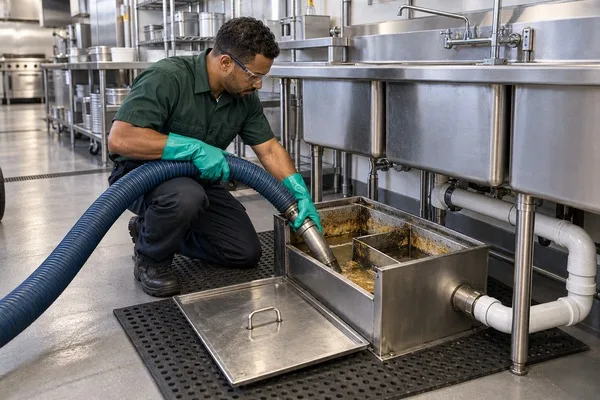
If an inspection is coming up, or could come at any time, the grease trap is one of the easiest places to lose points and one of the easiest problems to fix ahead of time. A full trap does not wait for a convenient day to back up.
Booking grease trap cleaning now costs far less than a citation, a reinspection, or a Friday night with water on the kitchen floor. To get on the schedule, contact our team or call (321) 363-1995.
What do inspectors check when it comes to your grease trap?
Inspectors look for signs that grease is under control: no backups, no standing water around floor drains, no sewage odor, and a trap or interceptor that is accessible and maintained. Many will also ask to see your cleaning records.
Some of this is visible from the kitchen. Slow sinks, gurgling floor drains, and a sour smell near the dish station all tell an inspector the trap has been pushed too long between cleanings.
Outdoor interceptors get attention too. A lid that is cracked, buried under mulch, or blocked by a dumpster pad raises questions on its own, even before anyone looks inside.
For busy kitchens along International Drive, where a single weekend of tourist traffic can push hundreds of extra covers through the line, the trap fills faster than many owners expect. The inspector does not grade on how busy you were. They grade what they find.
How does a full or neglected grease trap lead to backups and citations?
Once grease and food solids take up too much of the trap, wastewater no longer has time to separate. Grease slips through to the sewer line, or the trap backs up into your sinks and floor drains, often during the dinner rush.
A backup in a food prep area is not a minor note on a report. Standing wastewater near food, dishes, or prep surfaces is the kind of finding that can lead to a violation, a required reinspection, and in serious cases a pause in service until it is fixed.
Grease that escapes the trap creates a second problem. It hardens in the line downstream, and local utilities track where those blockages start. Restaurants that send grease into the system can face separate fines from the utility on top of any health inspection finding.
Older restaurant buildings, like many in the Mills 50 district, can be even less forgiving. Aging plumbing leaves very little margin before a full trap turns into a blocked drain.
How often should a high-volume Orlando kitchen schedule grease trap cleaning?
Most high-volume kitchens need service every one to three months, and some need it more often. A common industry guideline is to clean before grease and solids reach about a quarter of the trap's capacity.
The right interval depends on your menu and your equipment. A kitchen running fryers, a flat top, and heavy dish volume all day fills a trap much faster than a café serving mostly cold items. A small under-sink trap may need attention weekly, while a large outdoor interceptor can go longer.
Restaurants downtown near Church Street that see big swings between weekday lunch and weekend nightlife often do best on a fixed schedule, with an extra service booked ahead of known busy periods.
If you are not sure where your trap stands, our grease trap cleaning crew can measure it, pump it, and recommend an interval that fits how your kitchen actually runs. Your local utility may also set its own minimum, so check that requirement too.
How do documented cleanings protect you at inspection time?
Records prove the trap is on a schedule, not just clean on the day someone happened to look. A dated service record, with the volume pumped and who did the work, answers the inspector's question before they finish asking it.
A restaurant owner in the area called us ahead of an inspection that was weighing heavily on his mind. His filing system was three drawers overflowing with records and receipts. We scheduled his grease trap cleaning and made sure his records were together, so he did not have to hunt for them when the inspector arrived.
That is the part many owners overlook. A clean trap with no paperwork can still lead to awkward questions, and a stack of loose receipts is not much better. Keep every service record in one binder or folder near the office, newest on top.
Do not wait for a backup or a surprise visit to find out how full your trap is. Call Centrel Services at (321) 363-1995, or request your service date online to schedule grease trap cleaning before your next inspection.