Soggy or Wet Areas in Your Yard
Ponding or saturated grass over the field, especially in dry weather, means wastewater isn't soaking into the soil.

Years Experience
Years Drain Field Life
Counties
Served
Layouts:
Bed or Trench
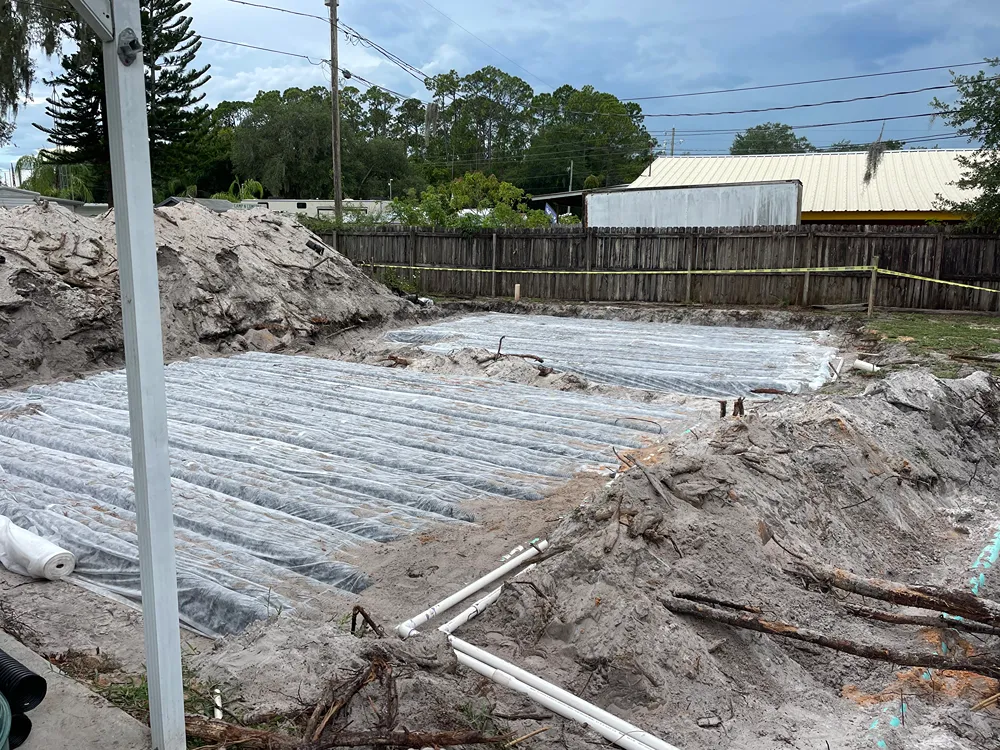
A drain field has to be set right the first time, because once the dirt goes back over it, nobody sees that work again. Drain field installation can also run bigger than people expect. For five new mobile homes in Mount Dora, we installed a low pressure dosing system: a very large setup with septic tanks and control panels, two transfer tanks, and about 300 linear feet of transmission line running from those transfer tanks to the main system.
New construction is a big part of this. In Longwood we put in a new drain field for a commercial building going up on the site. Most homeowners come at it from the other direction. Their tank level is high, the filter isn't the cause, and the field has quit. That's when we recommend replacement, which is the same installation work on a site with an old system in the way.
At Centrel Services, we size the field, check how deep it sits, and measure the separation from the bottom of the field down to the water table. Central Florida's sandy soil, high water tables, and heavy rains put real stress on a system. During major rain events we offer septic tank pumping to relieve an overloaded field, and we come back quickly afterward to help it recover.
Extremely green grass, bubbling, and ground that stays saturated over the field are the signs that need investigating. Here's what each one tells us:
Ponding or saturated grass over the field, especially in dry weather, means wastewater isn't soaking into the soil.
A healthy field doesn't smell. Odor around the top of the field, with a tank level that won't drop, tells us it's hydraulically overloaded.
Extremely green grass over the leach field always gets a closer look, because effluent may be sitting near the surface.
If the drains slow down again soon after a pump out, the tank wasn't the whole story. The field isn't taking water at a normal rate.
This is the clearest one. Unless a filter is holding it up, a high level in the tank means the field isn't accepting what the tank sends it.
We start at the cleanout and work toward the field. Not every warning sign means a failed drain field, and you shouldn't pay for one until we've proved it.
First we open the cleanout and check for liquid. If it's dry, the drain field isn't the issue. We're looking at a plumbing problem, and a sewer camera inspection shows us where.
Standing or overflowing liquid sends us to the septic tank. We locate it, expose it, open it, and check the level. If it's high, we pull the filter and watch. A level that drops means the filter was the problem, so we clean it, reinstall it, and remind you to clean it about once a year. A level that won't drop means the field itself has failed, and odor around the field confirms it's hydraulically overloaded.
Repair it if the trouble is limited to one spot. Replace it if the whole field is overloaded. The inspection decides, not the first guess.
Drain field repair typically runs $4,500 to $10,000 or more, and sometimes the field isn't the problem at all. On one call the cleanout held standing water, but the tank level was fine. A transit laser showed negative pitch on the plumbing line, so we fixed that line only and saved the customer thousands.
A saturated field with a level that won't drop needs replacing. That means a new drain field installation sized for the property and built to current code. System age, soil, and how deep the water table sits all shape what goes back in the ground.
Our Process
If there's an old system, we find out what failed and why. Then we size the job: soil, water table separation, setbacks, and property layout.
New systems, replacements, and major drain field work need a state permit through Florida's onsite sewage program. We handle the paperwork so you don't have to chase it.
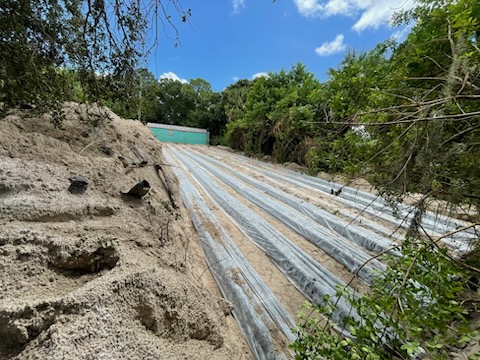
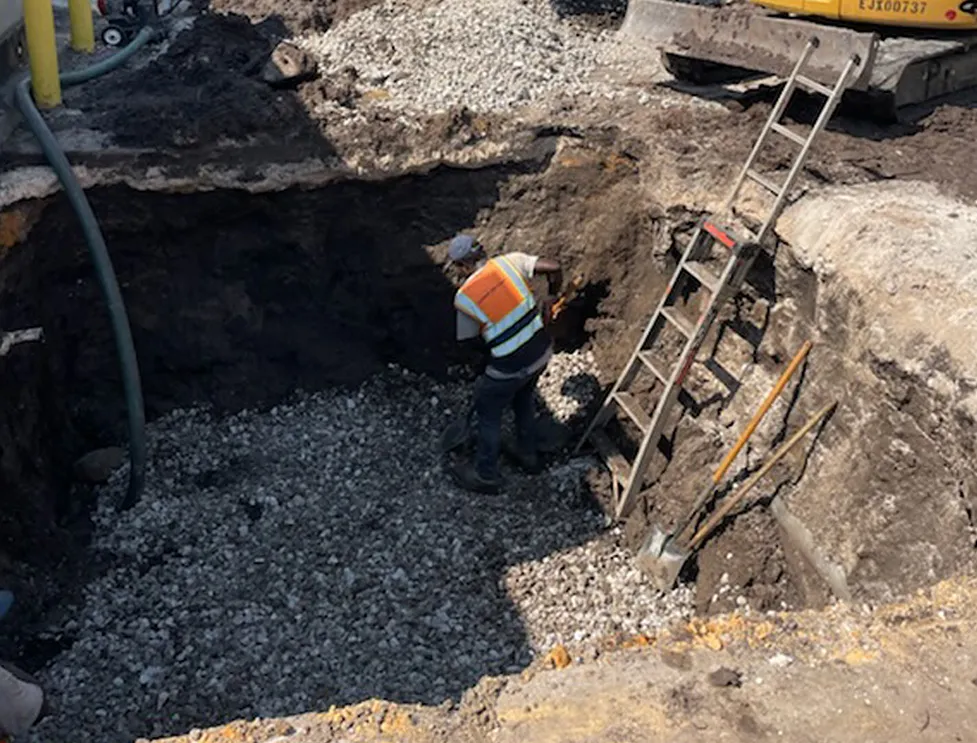
We get the utilities located, then excavate the failed field or dig for the new one. Tight access is normal for us, and we work to protect the rest of your landscaping.
It comes down to level and pitch. We set the field, tie in the header or distribution box, and check every run before anything gets covered.
After the required inspection, we backfill, grade, and restore the yard. You can see how our finished work looks on real jobs.

Sandy soil, high water tables, and heavy rain. Soil is what it is, and state code doesn't change from one county to the next, so every layout starts with those three.
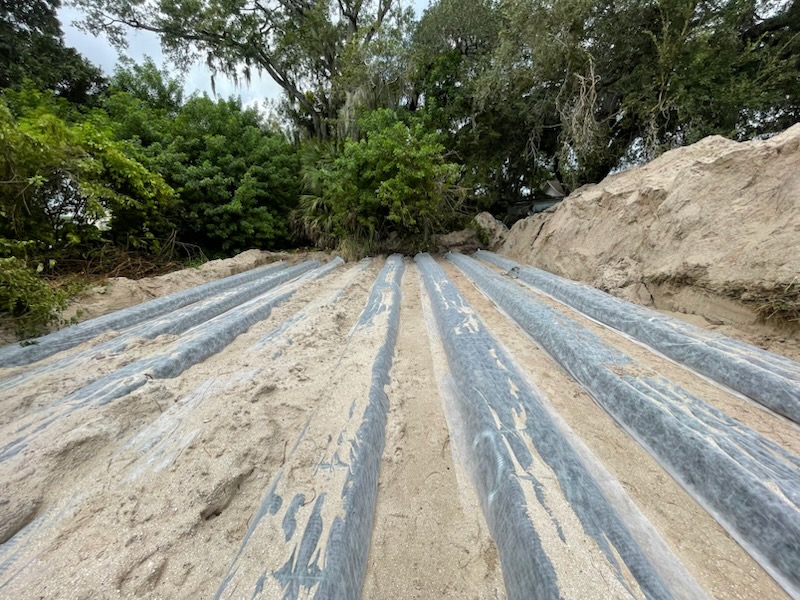
We check the separation between the bottom of the field and the water table on every system. A deeper water table also makes excavation easier, which can lower the cost.
Well drained soil speeds up installation and makes restoration easier. It still takes a properly built distribution system to spread effluent evenly across the field.
Storms cause saturation and groundwater infiltration. Limit your water use, and never pump the tank empty before a storm, because it can pop out of the ground.
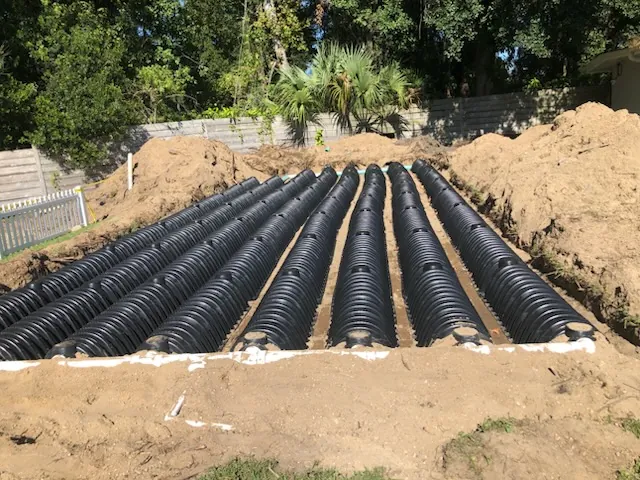
A bed is our first choice for most homes, but trenches cost less up front and can be the right call when the budget is tight. The difference is layout. A bed sets the drain field chambers side by side in one wide excavation. Trenches spread the system into separate runs with undisturbed soil between them, which uses a bigger piece of the yard but less material.
Material is where the money goes, so the trench layout usually comes in slightly cheaper overall. What you give up is storage. A bed holds more void space underground, and trenches have less of that cushion, so conservative water use becomes part of living with them. We do not offer financing right now. So before anything gets dug, we lay out both configurations and the price gap between them, and you pick the one that fits your budget.
Our trucks run out of Sanford, and this work comes from all over Central Florida, including:
Request A Service (321) 363-1995Click any question below to reveal the answer.
Contact UsIt depends on the system. Configuration, materials, yard access, soil, permits, and excavation all move the price, so we quote it after we see the site. For reference, drain field repair typically runs $4,500 to $10,000 or more. Estimates are free.
That depends on the soil, the water table, and how the system gets treated. Regular septic tank pumping, recommended every 2 to 5 years, is the best way to keep solids out of the field.
Yes. New systems, replacements, and major drain field work need a state permit through Florida's onsite sewage program, and we take care of it. Many smaller issues we find can be repaired without one.
Yes. We put in a new construction drain field for a commercial project in Longwood, and a large low pressure dosing system for five new mobile homes. Send us the site details and we'll quote it.
Call (321) 363-1995 or fill out the form below for a free estimate. We'll check the tank first, tell you what's failing, and lay out your options.