
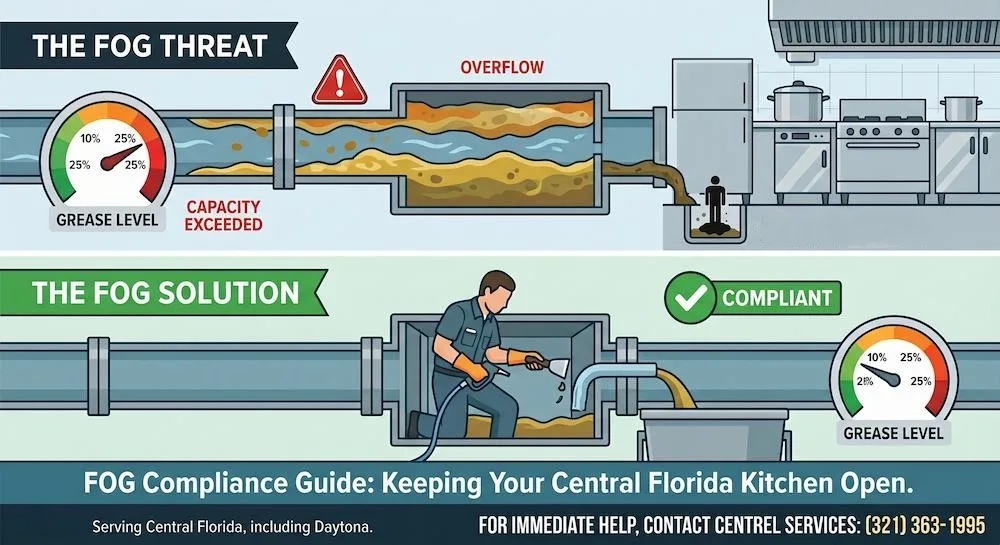
Running a commercial kitchen in Central Florida means dealing with fats, oils, and grease daily. FOG compliance requires businesses to pump out their grease traps before they reach 25% capacity to prevent catastrophic sewer backups. To avoid massive municipal fines and keep your restaurant open, you need a reliable maintenance schedule.
If you require immediate help, contact Centrel Services at (321) 363-1995. Our team handles the dirty work so you can focus on running your kitchen.
Local municipalities do not mess around when it comes to FOG regulations. A single failed inspection can halt your operations entirely. This guide covers everything kitchen managers and commercial property owners need to know about staying compliant.
What Is FOG and Why Does It Matter?
FOG stands for fats, oils, and grease created during commercial food preparation. These byproducts enter your plumbing system as hot liquids but quickly cool and solidify inside the pipes. This creates massive blockages that cause raw sewage to back up into your kitchen. We see this happen constantly in busy restaurants near the Daytona International Speedway.
When hot grease cools down, it coats the interior walls of your plumbing. Over time, this buildup restricts water flow completely. A completely blocked pipe requires expensive emergency hydro jetting to clear. By the time you notice water draining slowly, a catastrophic backup is already imminent.
How Do Commercial Grease Traps Work?
Grease traps intercept fats and oils before they enter the municipal sewer system. These plumbing devices cool warm wastewater from your sinks and dishwashers. The cooling process allows heavy solid waste to sink to the bottom. The lighter grease floats to the top of the tank. The remaining clear water then flows safely into the city sewer lines.
Passive grease interceptors sit underground outside your building and handle high volumes of water. Automatic grease removal units sit inside the kitchen under sinks for smaller applications. Both types require proper installation by a licensed contractor to function correctly. A poorly installed trap will leak foul odors into your dining room and fail health inspections.
What Are Florida's FOG Regulations?
Florida law mandates that all commercial food facilities maintain their grease interceptors strictly. The state requires a full pump-out when the total volume of captured grease and solid waste reaches 25% of the trap's total capacity. Inspectors regularly check local restaurants along Beach Street to ensure strict compliance. You must keep a detailed waste manifest on-site to prove you obey this rule.
Local municipalities enforce these state laws through health department inspections and utility checks. If you own a commercial property or manage a kitchen, you hold full responsibility for what goes down your drains. The city will trace grease blockages in the main sewer lines directly back to the offending restaurant. This results in severe penalties for the property owner and the business operator.
How Often Do You Need Grease Trap Cleaning Daytona Beach, Florida?
Most restaurants need professional grease trap cleaning Daytona Beach, Florida, every 30 to 90 days. High-volume kitchens frying food daily might need service every two weeks. A small cafe serving mostly coffee and pastries could stretch to quarterly cleanings. Your exact schedule depends heavily on your menu and the physical size of your interceptor tank.
Our technicians typically find that restaurants wait too long between cleanings. A standard commercial grease trap pump-out costs between $250 and $600, depending on the size of the tank. Waiting until the trap overflows will cost you thousands in emergency plumbing repairs and lost revenue. Set up a recurring schedule with a licensed provider to take the guesswork out of compliance.
What Are the True Costs of Non-Compliance?
Ignoring your grease trap leads to municipal fines ranging from $500 to $2,000 per violation. Worse than the fines, a neglected trap will eventually cause raw sewage to back up into your drains. This forces an immediate shutdown during peak dinner service until the health department clears you to reopen. You lose your inventory, your revenue for the night, and your reputation.
Improper FOG disposal also severely impacts the local environment. When grease escapes your trap, it clogs the city's main sewer lines and causes sanitary sewer overflows. These overflows push raw sewage into local waterways and streets. Restaurants caught dumping grease illegally face permanent closure and massive environmental cleanup bills from the state.
Best Practices for Kitchen FOG Management
Train your kitchen staff to scrape all plates and cookware directly into the trash before washing. Dry wiping pots and pans removes heavy grease loads before they ever reach your plumbing. This simple step drastically reduces the amount of FOG entering your interceptor. It also extends the time you can safely wait between cleanings.
In our 20+ years serving Central Florida, we've learned that employee training is your first line of defense. Never pour fryer oil down the drain. Collect used cooking oil in designated recycling bins provided by a rendering company. For the grease that does wash down the sink, you need reliable commercial grease trap cleaning. Professional contractors scrape the walls of the trap and pressure wash the baffles to ensure full capacity is restored.
What Is the Future of FOG Compliance?
Emerging technologies are making grease trap management easier for modern restaurant owners. Smart sensors are now installed directly inside the interceptor tank to monitor grease levels in real time. These devices send an alert to your phone when the trap hits that critical 25% capacity mark. This prevents overflow disasters and keeps you perfectly aligned with local regulations.
If your commercial property sits at a lower elevation near the Main Street Pier, you face unique plumbing challenges. You likely rely on a lift station to push wastewater up to the main city sewer lines. Heavy grease buildup will destroy the pumps inside these stations. Regular grease trap cleaning Daytona Beach, Florida, protects these expensive pumps. We highly recommend pairing your grease maintenance with professional lift station services to keep your entire wastewater system healthy.
Need Help With Your Grease Trap?
FOG compliance protects your business from massive fines and catastrophic kitchen shutdowns. Following the 25% capacity rule keeps your plumbing flowing smoothly and satisfies the health inspector. Partnering with a licensed local contractor ensures you always have the right documentation on hand.
Don't wait for a sewage backup to ruin your dinner service. Rely on the experts at Centrel Services for guaranteed compliance and zero call-backs. If you need reliable grease trap cleaning Daytona Beach, Florida, we are ready to help. Contact Centrel Services at (321) 363-1995 to schedule your service today.