
Building a new residential property near the St. Johns River requires strict attention to wastewater management. The aggressive 2026 Florida environmental regulations mean a failed site evaluation will stop your build completely. You need a perfect site assessment to get your permits approved on time and keep your project on schedule. Need expert help right now? Contact Centrel Services at (321) 363-1995 to schedule your site evaluation today.
Why Are Florida's New 2026 Septic Regulations So Strict?
Florida implemented the 2026 environmental regulations to protect vulnerable groundwater systems and the Floridan Aquifer from contamination. These new rules mandate stricter property line setbacks, advanced nutrient-reducing systems in sensitive ecological areas, and complete site evaluations before any construction begins.
If you plan to build near Lake Monroe in Sanford, you face intense scrutiny from local health departments. The state wants to prevent nutrient runoff from reaching our local waterways. This means developers and residential homebuilders must prove their chosen lot can safely process wastewater long before a backhoe ever touches the dirt. In our 20 years serving Central Florida, we've learned that skipping steps during the evaluation phase always leads to expensive delays later.
How Does Soil Composition Affect a Septic Tank Installation Sanford, Florida?
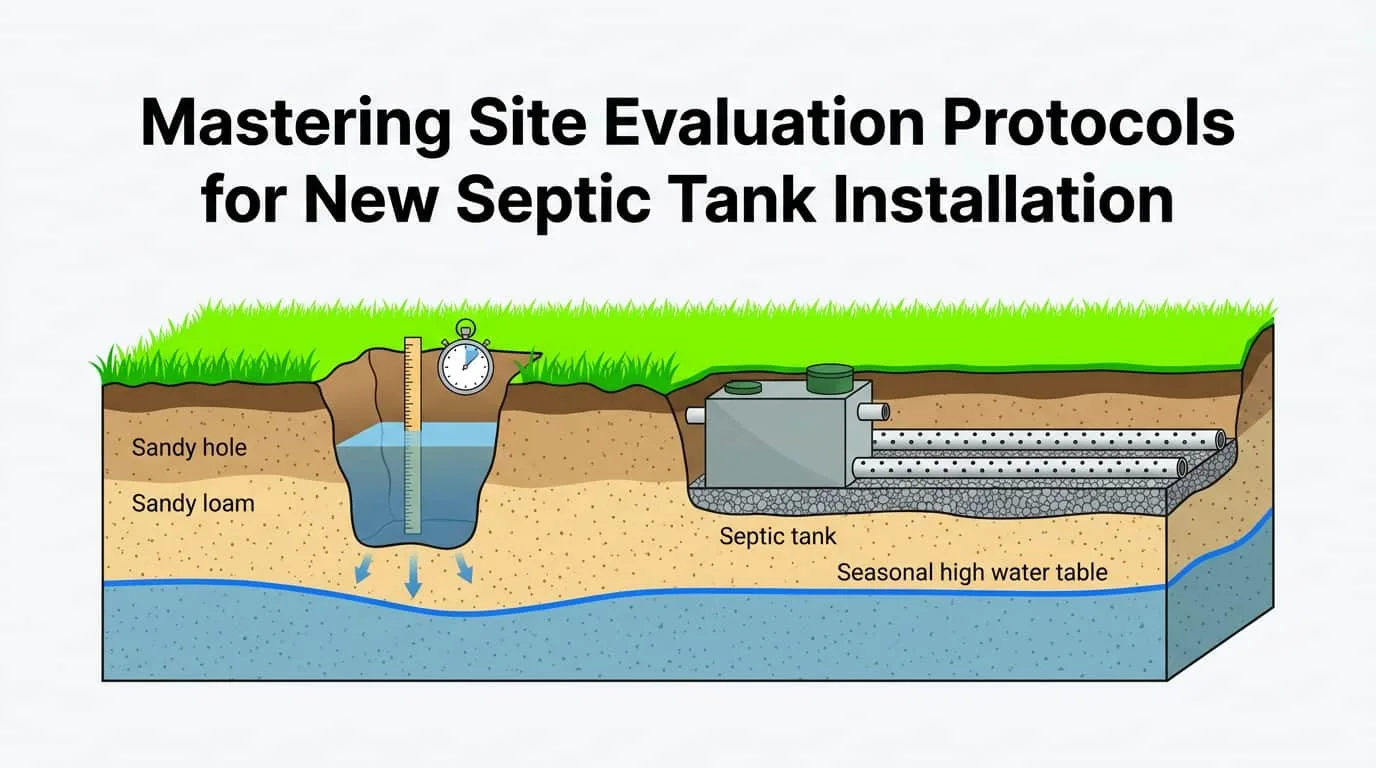
Soil composition dictates whether your new system will absorb wastewater efficiently or flood your customer's yard. Central Florida features highly porous sandy soils paired with exceptionally high water tables, requiring thorough percolation tests and deep soil borings to confirm viability.
When groundwater sits too close to the surface, the soil cannot filter effluent properly. Evaluators perform percolation tests to measure exactly how fast water drains through your specific soil type. If the soil drains too quickly, groundwater contamination becomes a serious risk. If it drains too slowly, you risk total system failure and the need for immediate drain field repair & replacement.
Karst topography also complicates builds in our region. This porous limestone bedrock creates sinkholes and unstable ground. A certified environmental health professional must assess the underlying rock structure to ensure your heavy concrete tanks will not shift or collapse over time.
What Are The Core Components of a Site Evaluation?
A complete site evaluation includes detailed soil analysis, seasonal high water table determination, topographical surveying, and measuring exact proximity to water sources. These four steps guarantee your system meets Orange and Seminole County codes.
Detailed Soil and Hydrological Analysis
Technicians start by identifying the seasonal high water table. Florida's wet season pushes groundwater levels up significantly between June and October. Your system design must account for this highest possible water mark, not just the dry winter levels.
Topographical Surveys and Site Grading
Water flows downhill. Your site evaluator maps the natural slope of the property to determine the safest location for the drain field. Proper site grading prevents stormwater from pooling over the septic components. If rainwater saturates the drain field from above, the system cannot push treated wastewater down into the soil.
Setbacks and Proximity Measurements
The health department enforces strict minimum distances between your septic components and surrounding features. You must maintain specific setbacks from private wells, property lines, building foundations, and surface waters.
Advanced Evaluation Techniques for Complex Lots
Some properties require more than just basic soil borings. Complex lots near Historic Downtown Sanford or areas with known soil instability benefit from advanced geotechnical studies. Technicians use remote sensing and GIS data to map soil types across large residential developments before drilling a single hole.
These advanced tools help homebuilders identify the most cost-effective locations for multiple septic systems in a new subdivision. Working with certified experts ensures you avoid building on lots that will ultimately fail the health department's strict new 2026 criteria.
Navigating the Permitting Process for a Septic Tank Installation Sanford, Florida
You must submit specific Department of Health forms and detailed site plans to secure your building permits. Local county regulations often require variances for smaller lots or properties with complex grading issues that do not fit standard templates.
The permitting process typically takes 2 to 3 weeks from initial application to approval. An initial site evaluation costs between $500 and $1,500, depending on the size and complexity of the lot. About 30 percent of initial applications face rejection due to missing topographical data or incorrect soil profiling. Working with a licensed contractor like Centrel Services ensures your paperwork is accurate the first time, keeping your construction timeline intact.
Designing Your System Based on Evaluation Data
Once you have accurate site data, you can select the right equipment for the property.
Selecting the Appropriate System Type
Our technicians typically find that conventional gravity-fed systems work perfectly for lots with deep, dry sandy soil. However, if your evaluation reveals a high water table or poor soil quality, you must install a performance-based aerobic treatment unit (ATU) to comply with the 2026 regulations.
Sizing Considerations
System sizing depends entirely on the estimated daily water usage. For residential builds, this calculation relies on the number of bedrooms and total square footage. A five-bedroom home requires a much larger tank and drain field than a three-bedroom build.
Ensuring Long-Term Performance
Proper design prevents future failures. Educate your home buyers on the importance of regular maintenance. Routine septic tank pumping removes solid waste buildup before it damages the drain field. Most systems need pumping every three to five years. Failing to maintain the system voids warranties and threatens local groundwater quality.
How Much Does a Septic Tank Installation Sanford, Florida Cost?
A standard septic tank installation Sanford, Florida, costs between $5,500 and $9,000 for a conventional system. Performance-based aerobic systems required by the new 2026 regulations typically run $12,000 to $20,000.
The final price depends heavily on the results of your site evaluation. If your lot requires thousands of yards of fill dirt to raise the drain field above the seasonal high water table, your costs will increase. Commercial properties or large multi-family residential builds will see even higher equipment and labor costs.
Need Help With Your Septic System Project?
Building a new home requires coordinating dozens of moving parts. Don't let a failed site evaluation derail your construction schedule. Our team handles the testing, the permitting, and the installation so you can focus on building the house. Contact Centrel Services at (321) 363-1995 to get your project started today.