
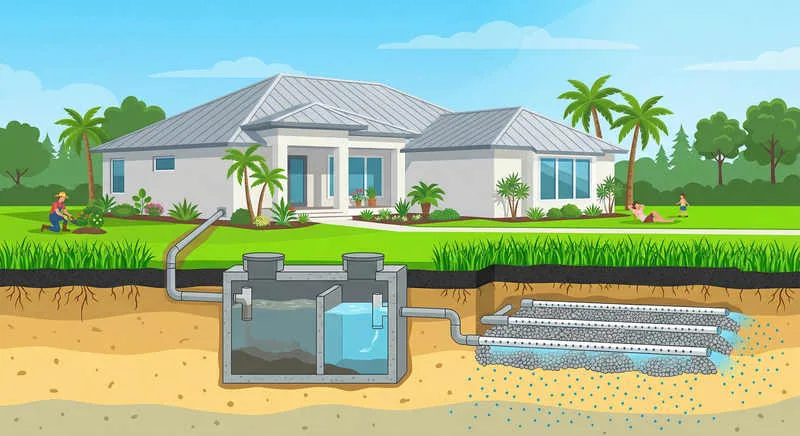
Living in Central Florida comes with its own set of rules for home maintenance. Between the intense summer storms and our unique sandy soil, your home's systems work hard year-round. This is especially true for your septic system. While it's easy to forget about what's buried in the backyard, ignoring it is a recipe for a messy, expensive disaster.
If you own a home in areas like Oviedo or Winter Springs, you know that a failing septic system isn't just a plumbing issue; it's a health hazard. The good news is that keeping your system healthy doesn't require a degree in engineering. A few simple habits and regular checkups can save you thousands of dollars in repairs and keep your drains flowing smoothly.
How Does a Florida Septic System Work?
A septic system separates solid waste from wastewater, treats the water, and returns it safely to the soil. In Florida, this process faces unique challenges due to our high water table and sandy terrain.
When you flush a toilet or run the sink, waste flows into the septic tank. Heavy solids settle at the bottom as sludge, while lighter fats and grease float to the top as scum. The liquid wastewater (effluent) sits in the middle and eventually flows out to the drain field. Here, the soil acts as a natural filter, removing bacteria and viruses before the water reaches the groundwater.
Because Florida's water table is often just a few feet below the surface, many local systems are "mounded" or raised to ensure proper separation. Understanding this delicate balance is the first step in septic tank care Orlando residents can rely on to prevent backups.
How Often Should You Pump Your Septic Tank?
Most experts recommend pumping your septic tank every 3 to 5 years. However, this isn't a hard-and-fast rule for everyone. The frequency depends on the size of your tank and the number of people living in your home.
A family of four with a standard 1,000-gallon tank will fill it up much faster than a retired couple living in the same-sized house. If you have a garbage disposal, you might need to pump even more frequently—perhaps every 2 to 3 years—because disposals add significant solid waste to the tank.
Ignoring this schedule allows sludge to build up, effectively reducing the tank's capacity. Eventually, solids can escape into the drain field, clogging the soil and causing system failure. Pumping typically costs between $300 and $600, which is a bargain compared to the $5,000+ price tag for a new drain field.
What Regular Maintenance Tasks Are Necessary?
Beyond pumping, inspect your system annually for signs of wear or damage. Check the tank lids for cracks and ensure they are securely fastened to prevent accidents and keep rainwater out.
Your drain field also needs attention. Ensure that storm drain & drainage systems are directed away from the septic area. In neighborhoods like College Park where heavy rains are common, excess water flooding the drain field prevents it from treating wastewater effectively.
Keep the area over your drain field clear. Never park cars or drive heavy machinery over it, as this compacts the soil and can crush the pipes below. Also, avoid planting trees or large shrubs nearby. Roots from oak or cypress trees can aggressively invade pipes, leading to blockages that require professional removal.
How Do You Avoid Common Septic Problems?
The most effective way to protect your system is to be careful about what goes down the drain. Your septic tank is not a trash can.
Never flush non-degradable items like "flushable" wipes, feminine hygiene products, paper towels, or cigarette butts. These items do not break down and will quickly clog your system. Even harsh chemicals like bleach or paint thinners should be avoided, as they kill the beneficial bacteria inside the tank that are responsible for breaking down solids.
In the kitchen, keep grease out of the drain. Pouring cooking oil or bacon fat down the sink is one of the worst things you can do. It solidifies in the pipes and tank, creating stubborn blockages. For restaurants or businesses, commercial grease trap cleaning is mandatory, but homeowners should also be vigilant about keeping fats out of their plumbing.
Which Products Are Safe for Septic Systems?
Look for cleaning products labeled "septic safe." These are usually biodegradable and phosphate-free, ensuring they won't disrupt the bacterial balance in your tank.
Water conservation is another critical aspect of septic tank care Orlando homeowners should practice. Overloading your system with too much water at once can stir up the sludge and push solids into the drain field. Spread out laundry loads over the week rather than doing them all on Saturday morning.
Fix leaky toilets and faucets immediately. A running toilet can waste up to 200 gallons of water a day, putting immense stress on your septic system. Installing high-efficiency toilets and showerheads can also significantly reduce the water load.
What Are the Signs of a Failing System?
Recognizing the early warning signs of a septic issue can prevent a total system failure.
- Slow Drains: If your sinks, showers, or toilets are draining more slowly than usual, it could be a sign of a full tank or a clog.
- Unpleasant Odors: A distinct "rotten egg" smell near the tank or inside your home is a clear indicator that gases are escaping or the tank is overflowing.
- Wet Spots: Puddles or lush, green patches of grass over the drain field—especially when it hasn't rained—suggest that effluent is rising to the surface.
- Gurgling Sounds: If you hear gurgling noises in the plumbing system when you run water, air might be trapped due to a blockage.
If you notice any of these signs, don't wait. Call a professional immediately to assess the situation.
How Do You Choose a Reliable Service Provider?
When it comes to your home's waste management, you need a partner you can trust. Look for a licensed and insured provider with experience in Central Florida's specific soil and water conditions.
Ask for recommendations from neighbors in areas like Lake Nona or check online reviews. A reputable company will provide a clear estimate and explain exactly what needs to be done. Avoid contractors who offer "miracle cures" or push for expensive replacements without a thorough inspection.
We are the local experts you trust with your business and customers. We are not a giant, faceless corporation; we are the folks who live and work right here in Central Florida.
Protecting Your Septic System and the Florida Environment
Proper septic maintenance is about more than just avoiding a backed-up toilet; it's about protecting our beautiful state. A failing system can contaminate groundwater, polluting the springs and lakes we all enjoy.
By following a regular pumping schedule, watching what you flush, and conserving water, you extend the life of your system and protect your property value. Septic tank care Orlando residents practice today ensures a cleaner, safer environment for tomorrow.
Need Help With Your Septic System?
Don't let a small issue turn into a major headache. Whether you need a routine inspection or suspect a problem, our team is ready to help.
Contact Centrel Services at (321) 363-1995 today for professional, reliable septic care. We’ll keep your system running smoothly so you can get back to enjoying your Florida home.