
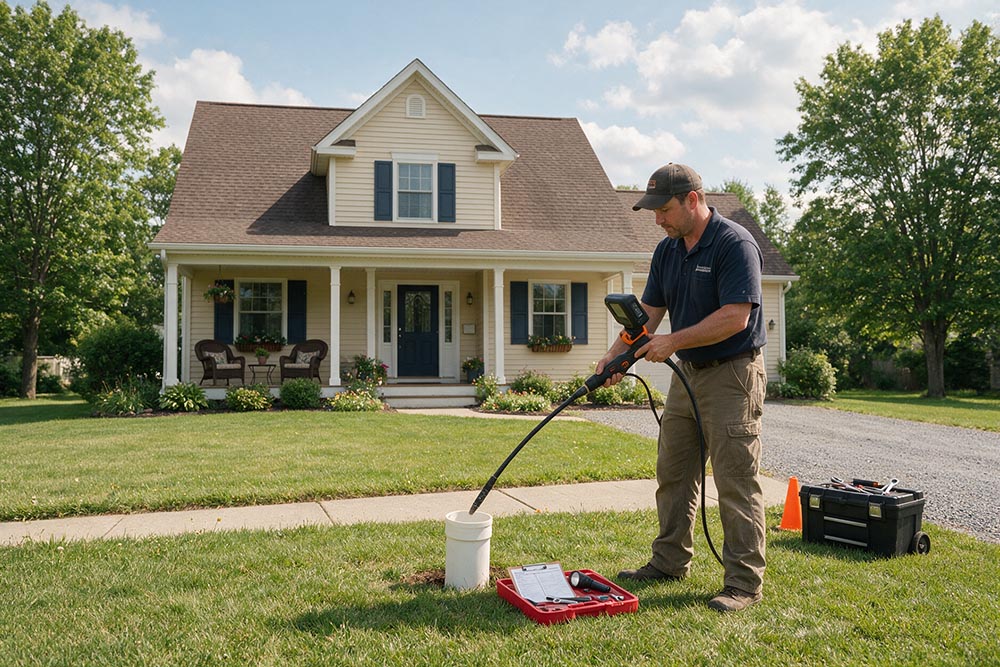
A septic inspection before closing is not a quick visual check. It is a thorough evaluation of the entire system: the tank structure, the water level, the drain field's size and depth, and whether the field is actually accepting water. If you are buying or selling a home with a septic system in Central Florida, here is exactly what gets checked and what happens if something comes up before closing. Schedule your inspection with Centrel Services at (321) 363-1995 to get on the calendar early.
What does a septic inspector actually check during a home sale?
We start on the surface, walking the area above the drain field and looking for signs of hydraulic overload: wet spots, unusual green growth, or odor near the field. Then we locate the cleanout and the tank, expose both access points, and open the tank.
Inside the tank, we check the water level against where it should be, inspect the filter for blockage, and look for any obstruction on the inlet line. We pump the tank and then do a structural inspection: checking for exposed rebar, cracks, seam breaks, or any signs of leaking. We measure the length, width, and depth of the tank.
From there we move to the drain field. We size it, check its depth, and measure the separation between the bottom of the field and the water table. We identify the fluid distribution method, whether it uses a header or a distribution box, and we note the overall depth of the system.
We also verify all required setbacks: from property lines, the home's foundation, wells, water lines, pool edges, ditches, and any nearby wetlands. Then we run a water hose into the drain field's distribution box for thirty minutes and watch whether the field accepts the water. After that we seal everything up and restore any sod or landscaping we had to remove.
The full process takes one to two hours. Cost is typically $625 to $825.
What happens if the septic inspection finds a problem before closing?
If the drain field has failed, it is up to the buyer and seller to work out who pays to repair it, or to factor the cost into the sale price. Most issues we find can be repaired without a permit, and we can often get to work on the fix quickly if the closing timeline is tight.
We write a clear proposal with a fair price and can typically begin repairs soon after the inspection if both parties want to move forward. The goal is to get the home to closing with a documented, functioning system, not to hold the deal up.
Minor issues like a clogged filter or a blocked inlet line are often corrected during the inspection visit itself. More significant problems like a saturated field get a written scope and a quote the same day so the parties know what they are dealing with before negotiations resume.
When should a buyer or seller schedule the septic inspection?
As early in the process as possible. Waiting until the week before closing to schedule a septic inspection is the most common mistake we see. If the field has failed, there is a repair process that takes time, and no one wants to be scrambling three days before a closing date.
Schedule the inspection as soon as the home is under contract. That gives everyone time to absorb the findings, negotiate if needed, and get any repairs started without the pressure of a countdown.
Buying or selling a home in Central Florida and need a septic inspection scheduled? Call Centrel Services at (321) 363-1995. We will get out there fast and give you a complete, documented evaluation of the system.