
If you own a home in Central Florida, you know that maintaining your property involves more than just mowing the lawn and cleaning the pool. Your septic system is a silent workhorse, handling wastewater daily. But when something goes wrong, the costs can be shocking. Understanding which parts hit your wallet the hardest can help you plan and avoid financial surprises.
Which Septic Component Costs the Most?
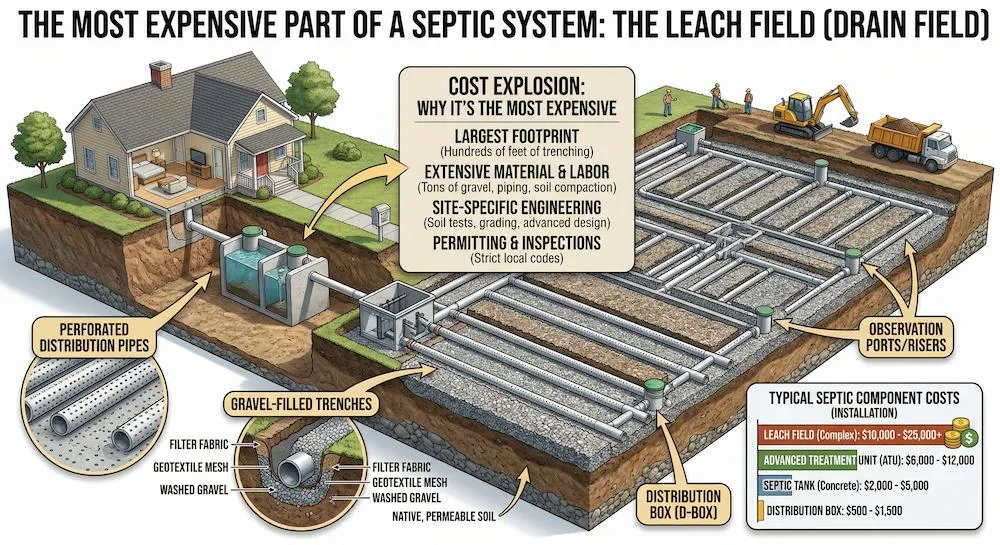
The drainfield is almost always the most expensive part of a septic system to replace. In the Orlando area, replacing a drainfield typically costs between $3,500 and $15,000, depending on the size of your home and the condition of your soil. This component acts as the final treatment area for wastewater, and its high price tag comes from the labor-intensive excavation, the amount of materials required, and the permitting fees involved.
When our technicians inspect a home in Winter Park or Oviedo, we often find that drainfield failure isn't just about a clogged pipe. It usually means the soil can no longer absorb liquid, requiring a complete overhaul of the yard. Because the drainfield takes up a large footprint—often hundreds of square feet—replacing it involves heavy machinery and significant landscape disruption.
Why Is the Drainfield So Expensive?
Three main factors drive up the cost of drainfield replacement: materials, labor, and local soil conditions.
Material Volume and Type
Unlike a septic tank, which is a single pre-cast concrete or plastic unit, a drainfield consists of tons of specialized sand, gravel, and hundreds of feet of piping or chambers. If your property in Lake Nona has limited space, you might need an advanced drainfield system, which uses costlier materials to fit a smaller footprint.
Labor Intensity
Installing a drainfield is heavy work. It requires clearing a large section of your yard, digging trenches, and carefully layering materials to ensure proper drainage. Our team typically spends 2-4 days on a complete drainfield replacement, using excavators and dump trucks to move earth.
Central Florida Soil Challenges
Florida's sandy soil is generally good for drainage, but many areas like Kissimmee have high water tables. If the water table is too close to the surface, we have to build a "mounded" system. This requires hauling in truckloads of fill dirt to raise the drainfield, which can double the cost of the project.
How Much Does the Septic Tank Itself Cost?
The septic tank is the second most expensive component, with replacement costs ranging from $3,000 to $6,000 in Orange and Seminole counties. While this sounds high, it's generally cheaper than a drainfield because the installation is more straightforward. A crane truck drops the new tank into a single hole, connects the plumbing, and covers it back up.
However, costs rise if you need a larger tank. Older homes in College Park often have 900-gallon tanks, but current code usually requires a minimum of 1,050 gallons for a three-bedroom home. Upgrading to a larger tank means more excavation and higher material costs.
Do Advanced Treatment Units Cost More?
Yes, Aerobic Treatment Units (ATUs) are significantly more expensive than standard gravity-fed systems. If your home is near a sensitive water body—like the Econlockhatchee River or the lakes in Windermere—local regulations might require an ATU. These systems use electricity and air pumps to treat waste more aggressively before it enters the ground.
Installing an ATU can cost between $10,000 and $20,000. Additionally, they require a maintenance contract and regular inspections, adding $300 to $500 to your annual household budget. While pricey, they are excellent for protecting our local groundwater.
Can Commercial Systems Be Pricier?
Commercial systems operate on a different scale entirely. For restaurants and businesses, managing grease is a massive factor. We often recommend commercial grease trap cleaning to prevent costly backups. If a commercial grease trap fails, replacement can easily exceed $8,000 due to the size and heavy traffic loads these tanks must withstand.
What Other Fees Should I Expect?
Permits and engineering plans add a surprising amount to the final bill. In Florida, you can't just dig a hole and install a system. You need a permit from the Florida Department of Health.
- Permit Fees: In Orange and Volusia counties, septic permits typically run between $400 and $600.
- Engineering: If your lot has difficult soil or drainage issues, you may need a site-specific engineered design. This can add another $500 to $1,500 to your total project cost.
- Clearing and Restoration: If your drainfield is located under a beautiful oak tree or a paved driveway, you'll have to pay for tree removal or concrete restoration.
We also see costs associated with managing water runoff. Proper storm drain & drainage systems are vital to keep excess rainwater from flooding your septic system. If your gutters drain right onto your septic lid, you're asking for trouble.
How Can You Avoid These Huge Costs?
Preventative maintenance is the only way to delay these expensive replacements. The most effective step is regular pumping. For most homes, septic tank service Deltona residents rely on costs between $275 and $450. Doing this every 3 to 5 years prevents solids from escaping the tank and clogging the expensive drainfield.
Use Water Wisely
Overloading your system with water is the fastest way to kill a drainfield. Spreading out laundry loads and fixing leaky toilets helps the soil absorb water at a natural pace.
Watch What You Flush
Your septic system is not a trash can. Flushing wipes, feminine hygiene products or pouring grease down the sink creates a sludge layer that doesn't break down. This sludge eventually moves into the drainfield pipes, creating a biomat that blocks drainage.
Protect the Field
Never park cars or drive heavy machinery over your drainfield. The weight compacts the soil and can crush the pipes below. We recently helped a homeowner in Sanford who crushed their drainfield pipes by parking a boat trailer on the grass. That mistake turned into a $6,000 repair job.
When Should You Call a Professional?
If you notice slow drains, wet spots in the yard, or bad odors, call a pro immediately. Ignoring these signs won't make the problem go away; it will only make the repair more expensive. Catching a clogged filter or a broken pipe early might cost $300, whereas waiting until the sewage backs up into the house could lead to that dreaded $10,000 drainfield replacement.
Need Help With Your Septic System?
Don't let a septic failure drain your savings. Whether you need a routine pump-out or a major repair, we're here to give you honest answers and quality work.
Contact Centrel Services at (321) 363-1995 today. We serve homeowners across Central Florida with reliable, expert care.