
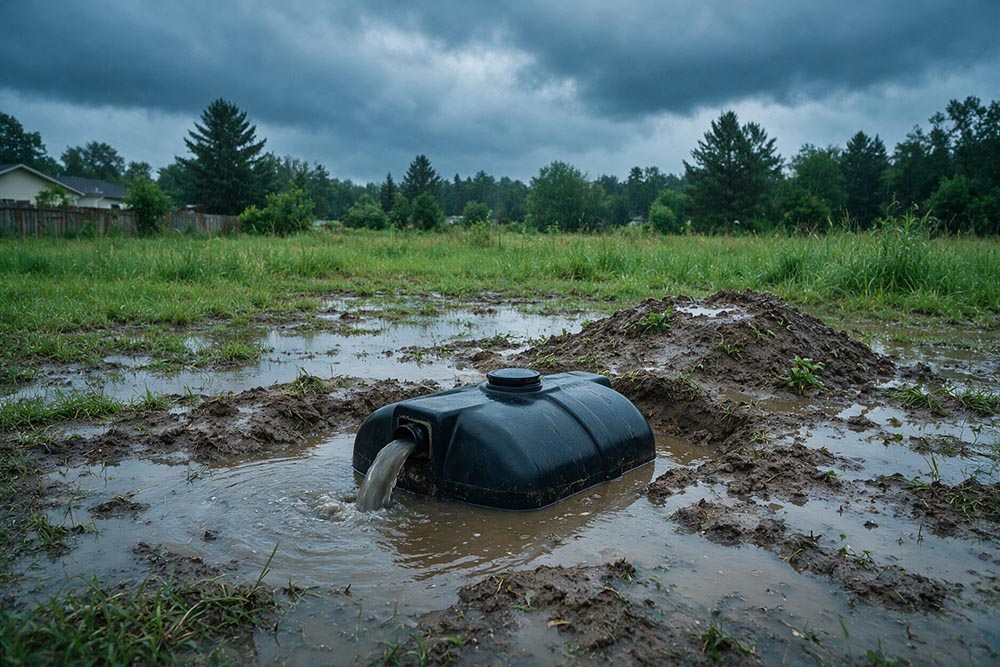
Central Florida gets hit hard during storm season, and septic systems take a beating in ways most homeowners do not expect. The problems are not always dramatic. They are often quiet, building underground while the storm passes, then showing up as backups and odors a day or two later. Reach out to Centrel Services at (321) 363-1995 if your system is showing symptoms after a storm.
Why do septic systems fail during or after heavy rain?
The main problem is system saturation. When the soil around a drain field becomes waterlogged from heavy rain, it loses its ability to accept the liquid coming from the septic tank. The field is designed to let effluent absorb into the ground. When the ground is already full of water, that process stops.
Groundwater infiltration is the second issue. During a major storm, water pressure in the surrounding soil can actually push groundwater into the septic tank through joints or cracks. That raises the level inside the tank even without the household adding any water, and can push effluent back toward the house.
What should homeowners do before a tropical storm or major rain event?
Do not pump the septic tank empty before a storm. This is one of the most common mistakes we see, and it makes things worse. An empty tank is lighter than the soil around it. When saturated soil becomes heavy and the tank has no weight inside to anchor it, the hydrostatic pressure from the surrounding groundwater can push the tank upward. Tanks can physically pop out of the ground.
Make sure both septic tank access lids are closed and sealed before a major storm. Open or improperly seated lids allow rainwater and runoff to pour directly into the tank and overload it faster than any normal household use could.
Check your downspouts. If any gutter downspouts are directing water toward or over the drain field, divert them. That concentrated flow goes directly into the soil the field depends on for absorption.
Limit water use in the 24 to 48 hours around a major storm. Skip large laundry loads. Do not fill a bathtub. Shorter showers help. Every gallon the household sends into the system is a gallon the saturated drain field has to somehow handle.
What about sewer lines during a storm?
For homes connected to a sewer system rather than a septic tank, the focus before a storm is on cleanouts. Make sure all cleanout caps are in place and tightly sealed. Stormwater infiltrating the sewer system through open or damaged cleanouts adds to the overall volume the system has to handle, which can cause backups throughout the line.
After the storm, there is generally nothing to inspect on the sewer line itself unless you are experiencing active backup symptoms. Unlike a septic system, the sewer line does not interact directly with the soil in a way that storm saturation affects. Symptoms after a storm are more likely to be from the cleanout infiltration than from any change to the pipe itself.
What are the signs that storm damage to a septic system needs immediate attention?
Slow drains or backups that appear within 24 to 48 hours of a major rain event are worth a call. Odor near the drain field that did not exist before the storm is worth monitoring closely, especially if it persists past two or three dry days.
Pooling water over the drain field that is not receding as the surrounding yard dries out is the clearest signal that the field may need attention. Call Centrel Services at (321) 363-1995 and we'll help you figure out whether the system just needs time to dry out or whether there is something that needs to be addressed.