
What Did This Park Sanitary Upgrade Include?
Two jobs on one system: new septic tanks in the ground, and new galvanized pipe inside the concrete treatment basins. Centrel Services handled both on this park property in Orlando, Florida. The park treats its own wastewater on site instead of sending it down a city sewer main, so every sink and toilet on the property drains into equipment the owner is responsible for. When that equipment wears out, no utility crew is coming to fix it. That changes who you call. The owner has to hire someone who can work on the tanks and the plant piping, and ideally the same crew handles both. The tank side of the work falls under the Florida Department of Health in Orange County onsite sewage program, which still permits and inspects septic tanks in the county. Our crew worked in full sun on a fenced site with chlorine stored a few steps away. Nobody rushed.
Why Does a Park Need Its Own Wastewater Plant?
Because the sewer main never made it out that far. The plant is the sewer. Plenty of older properties on the edge of the metro sit past the reach of city lines, so they run what the industry calls a package plant. That is a compact treatment system of concrete basins, air piping, and a chlorine stage, sized for one property. This photo shows the footprint from outside the fence. The concrete basins run along the right, the white shed on the left holds the chlorine, and barbed wire tops the chain link to keep people away from open tanks. Along the bottom edge you can see the green sediment sock laid beside the fresh dig, which keeps loose sand from washing off site in an afternoon storm. A plant like this is regulated as a domestic wastewater facility under the Florida DEP wastewater permitting program, which is a different rulebook than a backyard septic tank. We get calls like this all over Orlando, FL, and the first question is always who holds the permit.


What Should You Know Before New Septic Tanks Go In?
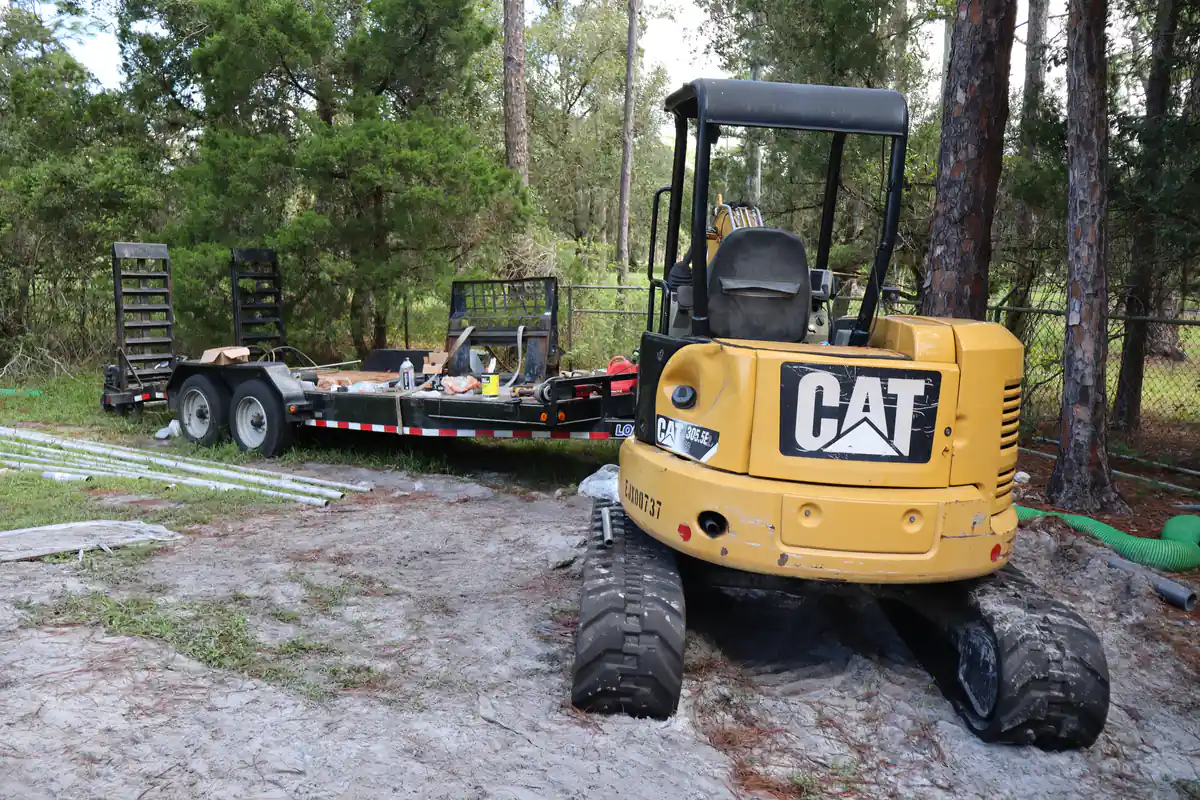
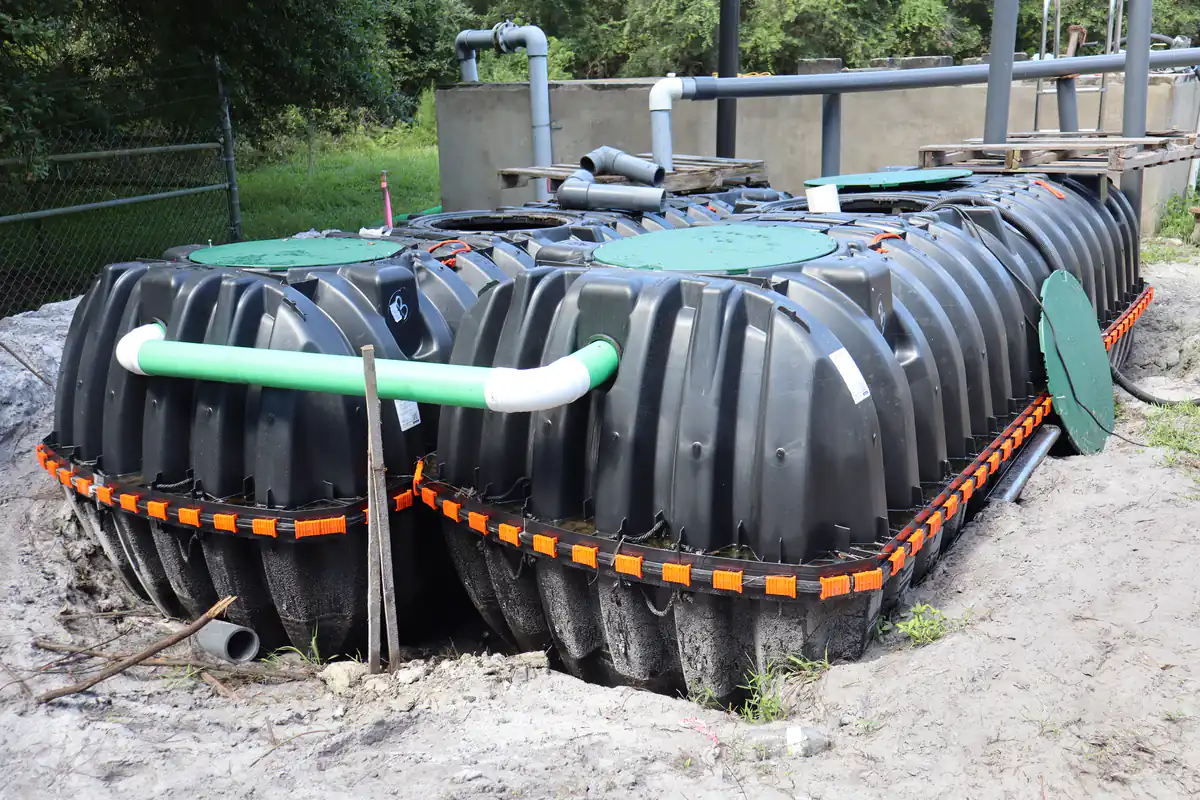
Mostly, that the ground is going to fight you. The two new tanks in this photo are ribbed polyethylene, set side by side and joined with a green PVC crossover so flow moves from the first tank into the second. A plastic tank weighs a fraction of what a precast concrete one does. That let our crew set them with the compact excavator already on site instead of bringing in a crane truck. The tradeoff is buoyancy. Central Florida flatwoods sit on sandy soils like Myakka fine sand, and the UF/IFAS guide to Florida soils describes those soils as poorly drained with seasonally high water tables. An empty plastic tank sitting in groundwater wants to float, and a tank that lifts will crack its pipe connections. So the bedding, the backfill, and any anchoring the manufacturer calls for get done exactly as written. Our underground utility installation crews plan every tank set around that risk before the first bucket of sand comes out.
Why Thread Galvanized Pipe on Site Instead of Ordering It Cut?
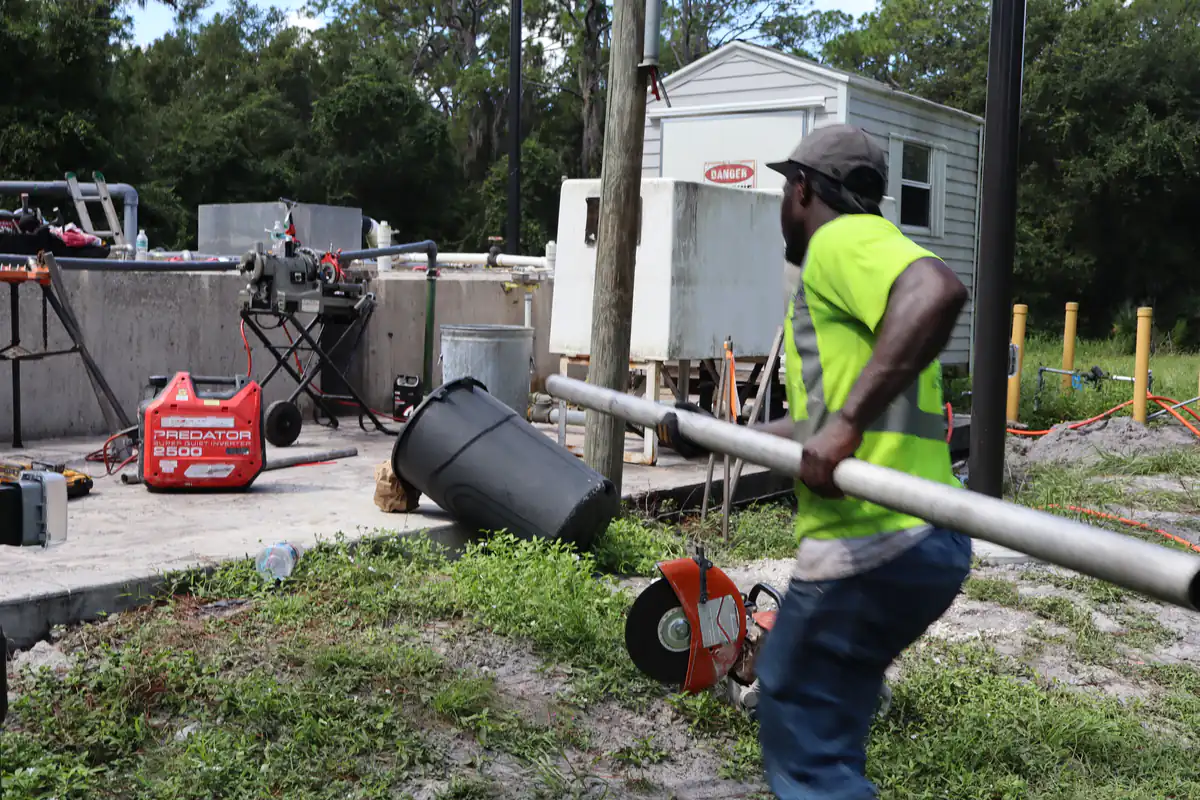
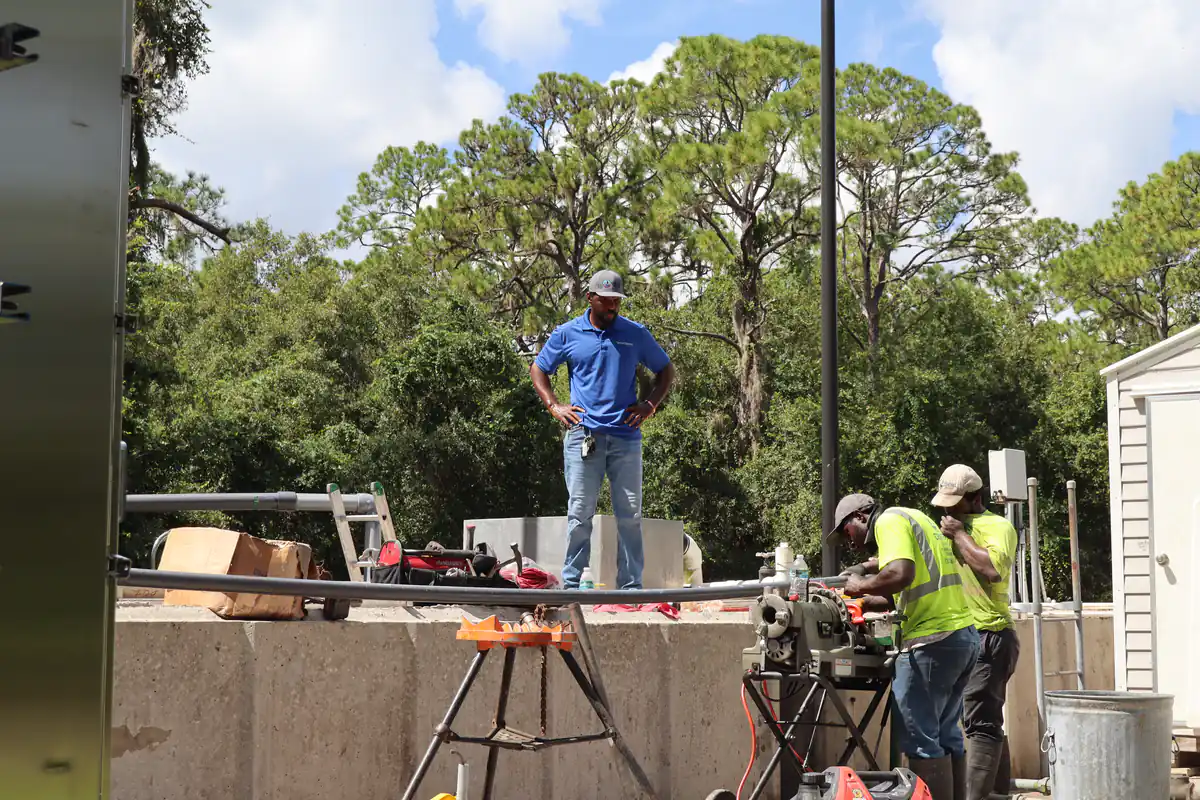
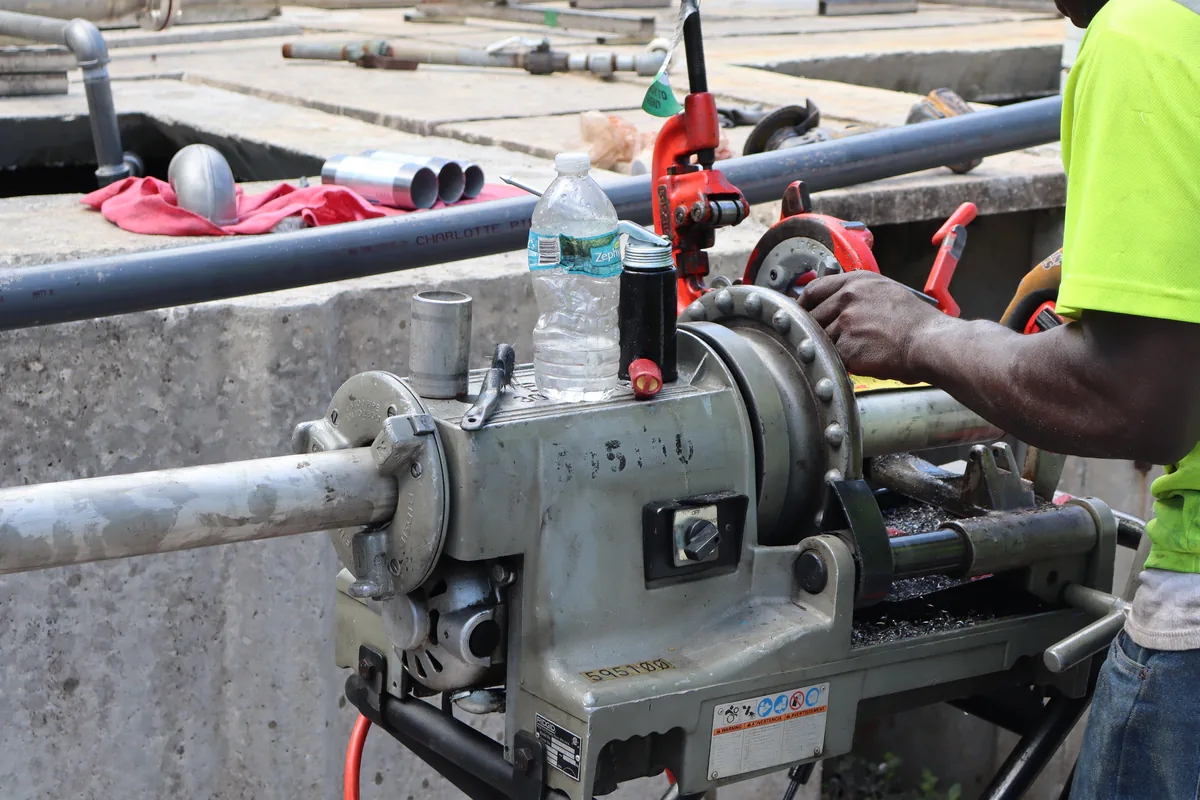
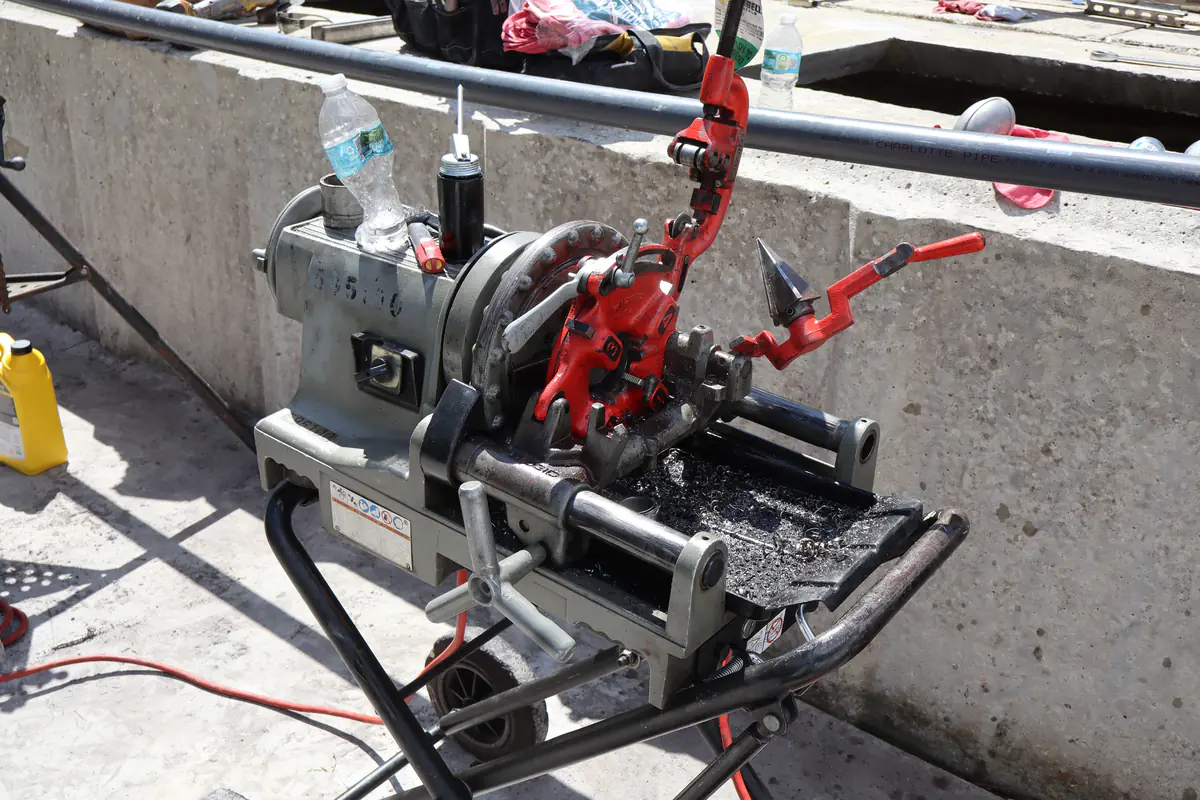
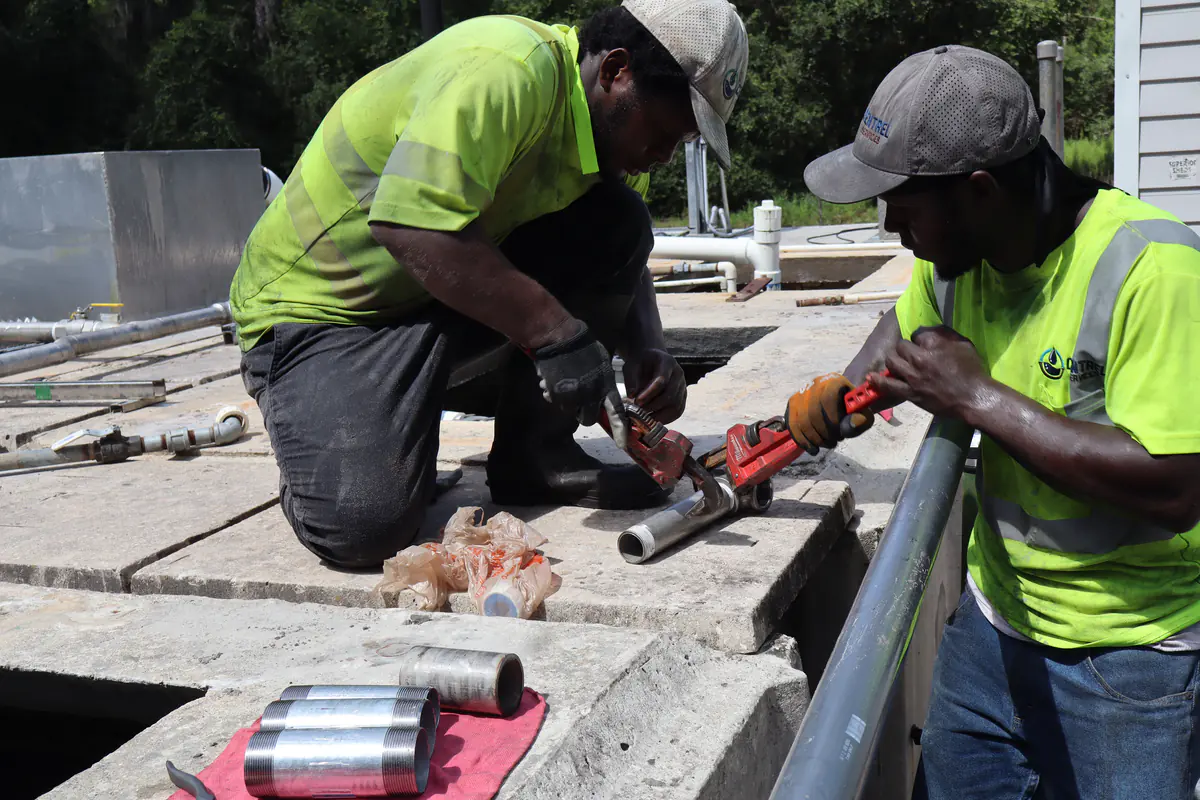
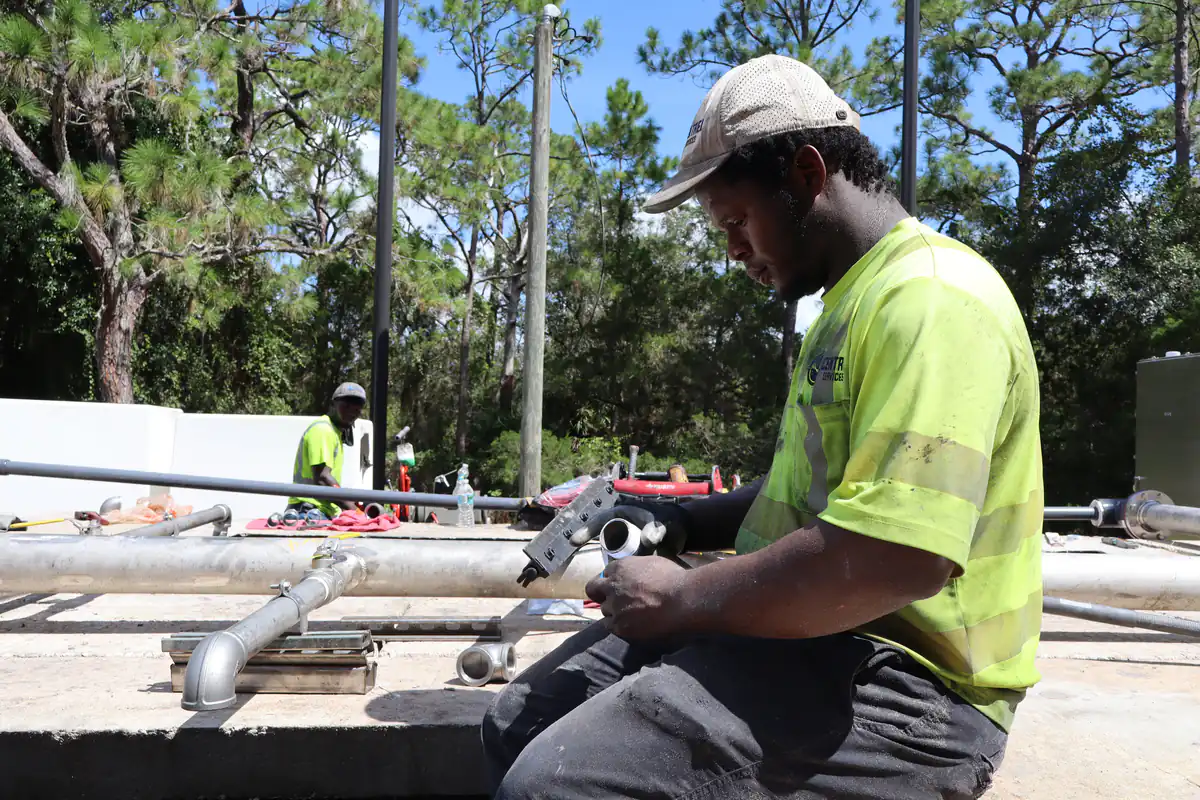
Because nothing on an existing plant lines up with a stock length. Every run of new galvanized pipe had to meet the old connections exactly, so the crew brought the shop to the job. In this shot one tech feeds pipe through a power threading machine while another steadies the long end on a tripod pipe stand. The threader cuts the pipe to length, reams the burr off the inside, and cuts fresh threads without the pipe ever leaving the machine. A portable generator sat on the slab to run it. Each set of threads gets checked by hand before anything heads toward a basin. Then the joint gets thread tape, and two pipe wrenches make it up tight, one turning and one holding. It is slow work. It is also the same careful fitting our plumbing crews do inside buildings, except here it happens on top of a concrete wall in the middle of a Florida summer, with the next length already waiting on the stand.


How Do You Replace Pipe Inside a Treatment Basin?
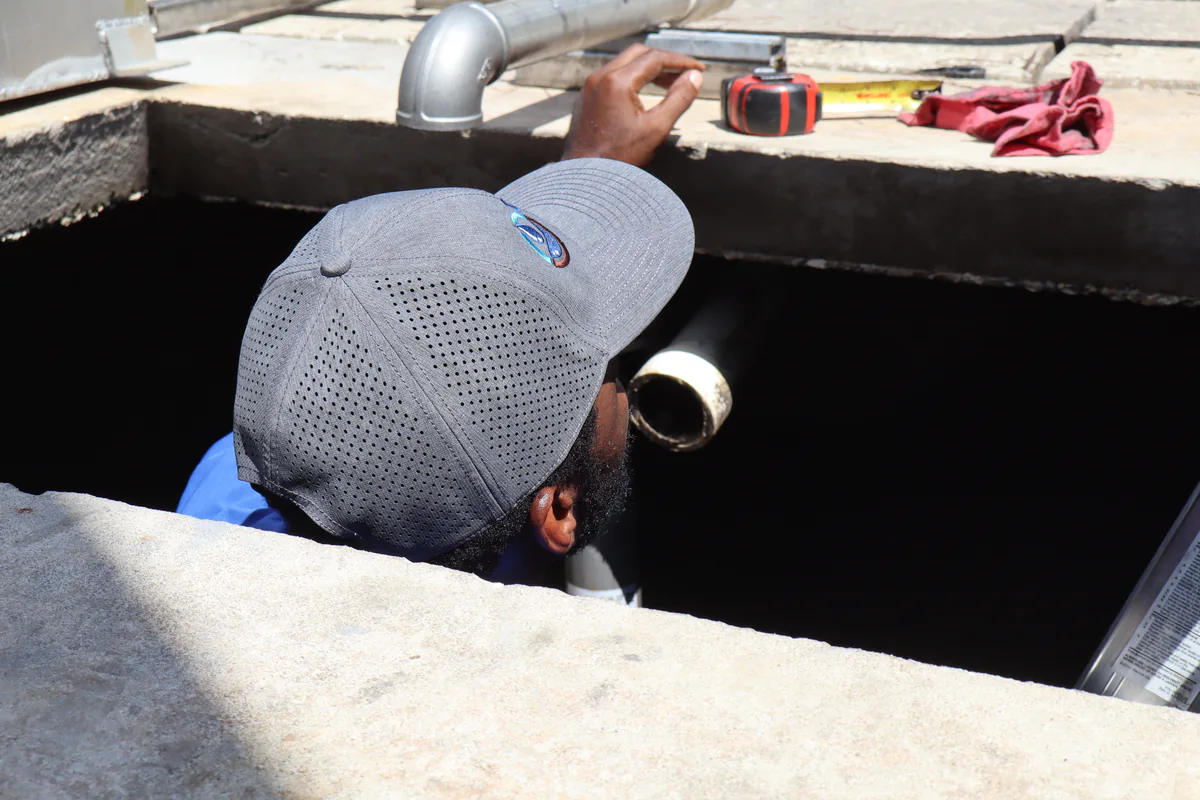
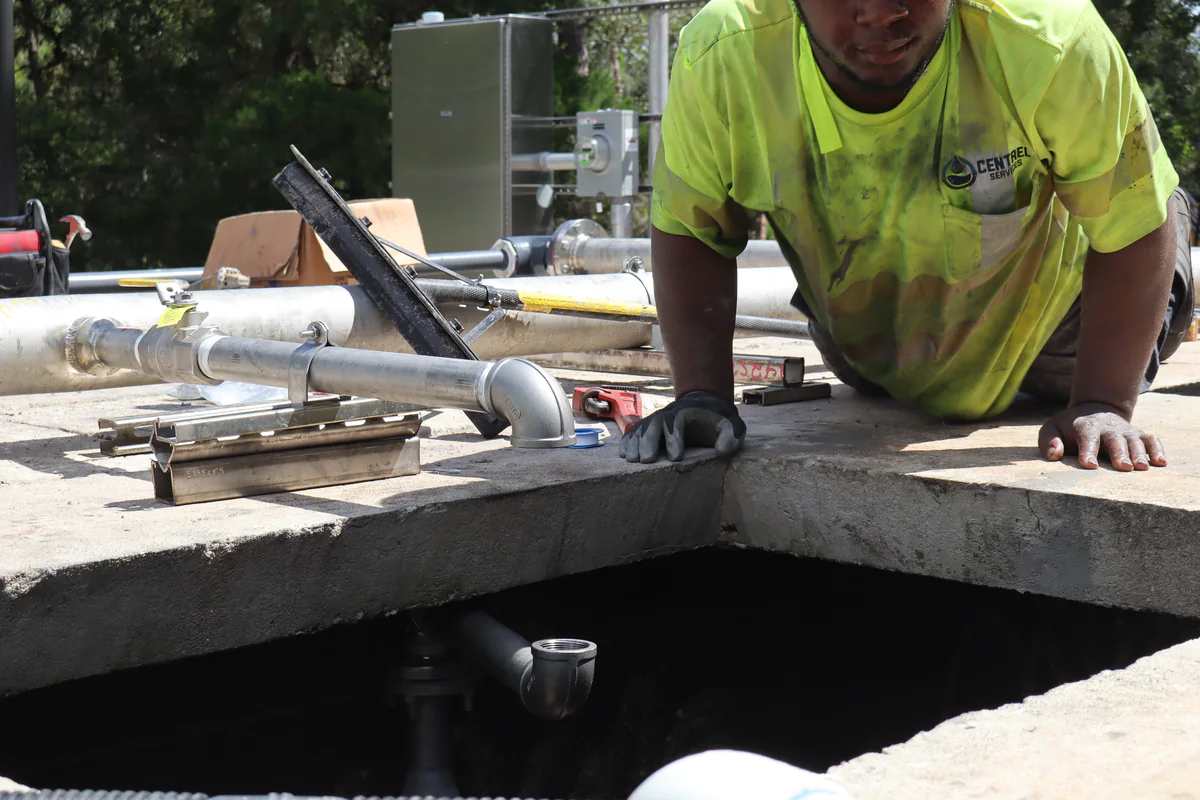
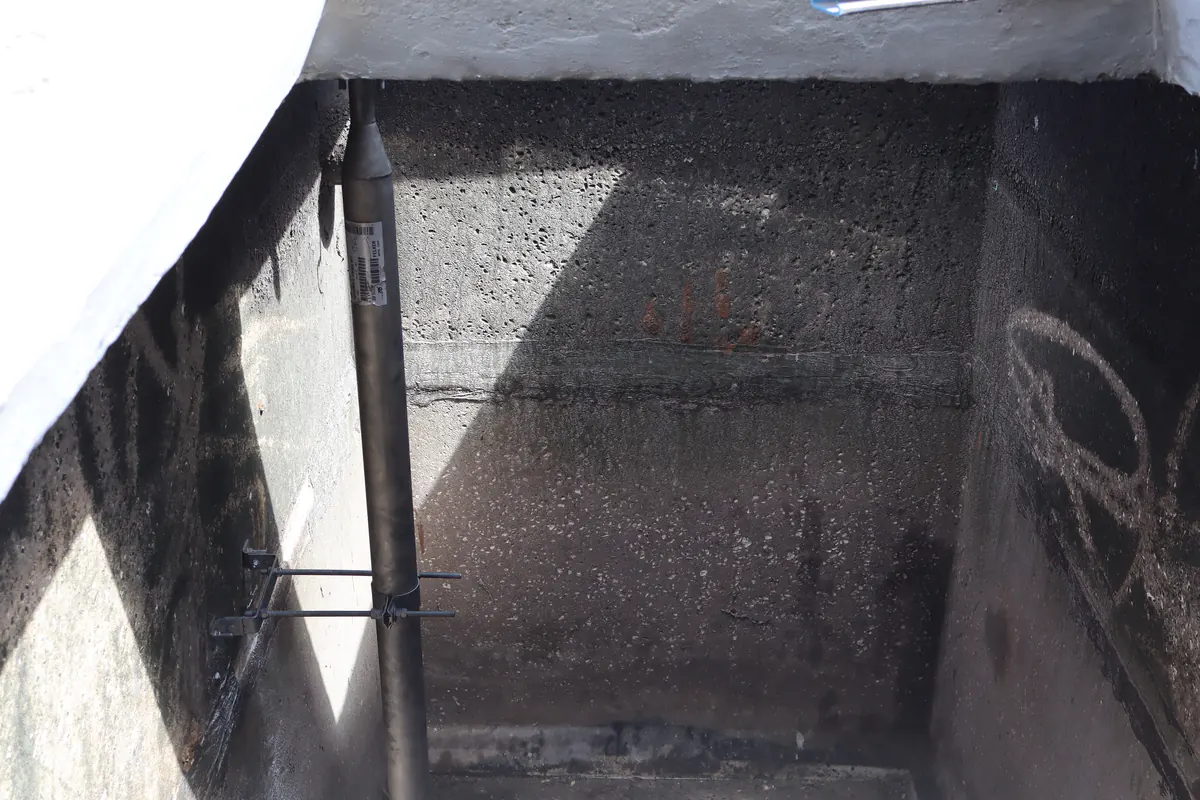
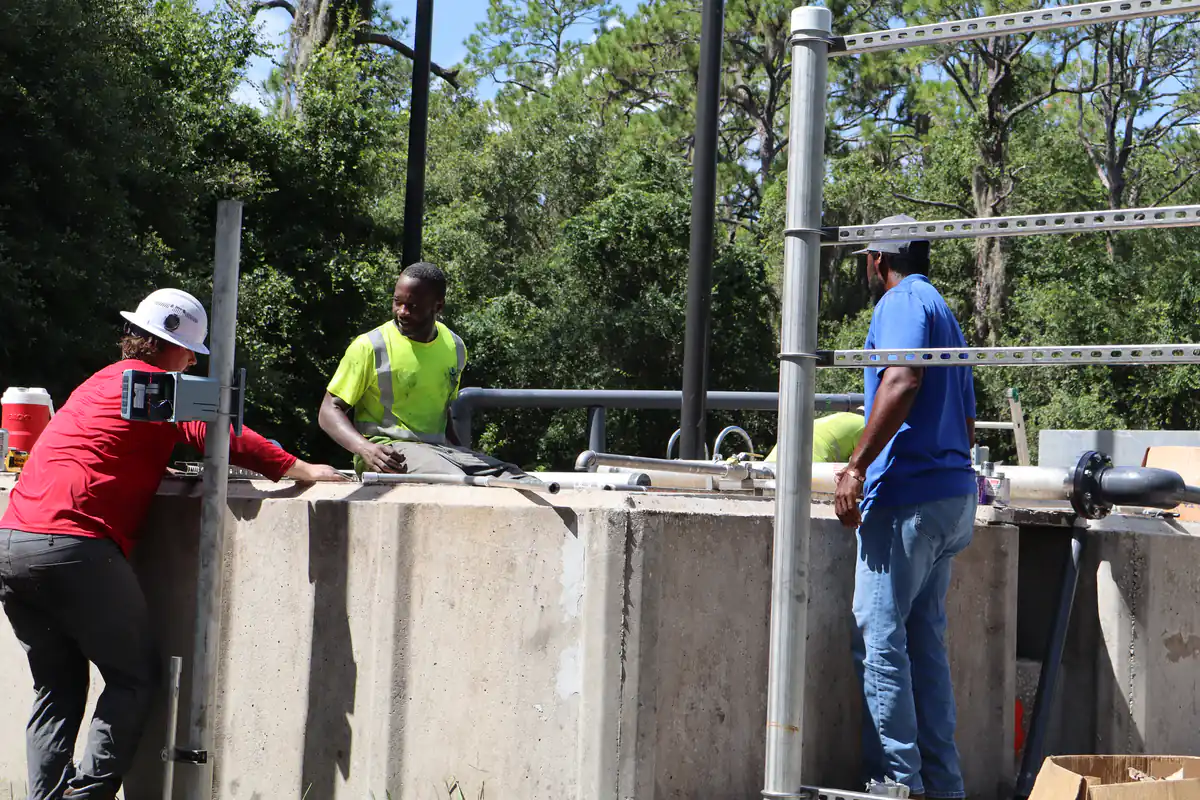
From the edge, one connection at a time. Here a tech leans over the top of the basin wall and reaches down with a pipe wrench to tighten a new galvanized elbow just below the rim. The pipe drops from there into the tank to feed the equipment at the bottom, so every joint has to be right before it goes under. A leak up top is easy to spot. A leak below the waterline is not. The routine on a job like this is to measure each drop from the rim with a tape, dry fit it, and only then make it up for good. The long sections resting on the wall behind him were threaded and staged in order before anyone reached into the tank. Once the upgrade is finished, the new tanks still need regular septic tank pumping like any other system. Our team works that schedule out with the owner before the last truck leaves the site.
What Else Did the Crew Capture on This Job?
More photos from the upgrade, from staging new pipe to the finished tanks. Select any photo to see it full size.
Is Your Property Running on an Aging Wastewater System?
From new septic tanks to the piping inside a treatment plant, Centrel Services plans the upgrade and does the work with its own crews.