
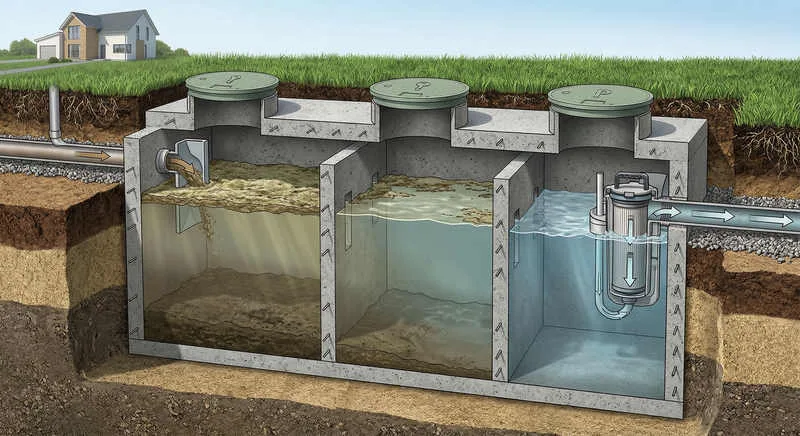
Florida's geography makes standard septic systems a real challenge. The same porous limestone and high water table that make Central Florida beautiful also make it one of the most sensitive environments for wastewater treatment in the country. For homeowners across Orlando, from the lakefront properties of Dr. Phillips to the newer builds near Lake Nona, that means conventional gravity-fed septic systems often aren't enough.
Advanced Treatment Systems (ATS) are changing how Florida homeowners handle wastewater. They treat effluent to a higher standard before it ever reaches the soil, protecting the aquifers and springs that supply our drinking water. If you're building a new home, replacing a failing system, or dealing with a lot that won't support a traditional drainfield, this guide explains what you need to know.
Need help right now? Centrel Services serves homeowners throughout Central Florida. Call (321) 363-1995 for a free on-site assessment.
Why Does Florida's Geography Demand a Different Approach?
Florida sits on top of the Floridan Aquifer, one of the most productive aquifer systems in the world. The problem is that our porous limestone bedrock doesn't filter contaminants the way deeper soils do in other states. A conventional septic system that works fine in Georgia or Tennessee can allow nitrogen and bacteria to pass straight through Florida's soil and into the groundwater within feet of the drainfield.
The water table in many parts of Orange and Seminole counties sits just 18 to 24 inches below the surface. During our rainy season (June through September), that number gets even smaller. When a traditional septic system discharges into saturated soil, it has nowhere to go. That's when you start seeing wet spots in the yard, odors, and potential groundwater contamination.
Our technicians at Centrel Services have worked on hundreds of systems across Central Florida, and the properties that struggle most with conventional septic are those on smaller lots with high water tables or near lakes, wetlands, and retention ponds. These are exactly the conditions where Advanced Treatment Systems earn their cost.
What's the Difference Between a Traditional Septic System and an Advanced Treatment System?
A conventional septic system separates solids from liquid waste in a tank, then disperses the liquid (effluent) into the soil through a drainfield. The soil is supposed to do most of the treatment work. That works reasonably well where soils are deep and the water table is low. Not so much here.
Advanced Treatment Systems add a treatment stage before the effluent reaches the drainfield. The two technologies most common in Florida are:
Aerobic Treatment Units (ATUs): These systems inject air into the tank to support aerobic bacteria, the same kind that break down waste in municipal treatment plants. The result is effluent that's 90 to 95% cleaner than what a conventional septic tank produces. ATUs typically require a spray irrigation dispersal field rather than a traditional drainfield.
Innovative/Alternative Systems with Nitrogen-Reducing Biofilters (INRB): These are a newer category of system designed specifically to reduce nitrogen in the effluent before it reaches the soil. Florida's springs and coastal waters are particularly vulnerable to nitrogen pollution, which causes algae blooms and can damage aquatic ecosystems. INRB systems can reduce total nitrogen by 50 to 65% compared to a standard septic system.
Both technologies treat wastewater to a higher standard, which is why Florida regulators allow them on sites where conventional systems wouldn't be approved.
What Are the Real Benefits of an Advanced Treatment System for Florida Homeowners?
Smaller drainfield footprint: Because the effluent is cleaner, it needs less soil to finish the treatment process. ATU systems can reduce the required drainfield size by 30 to 50%, which matters a lot on smaller lots. In Winter Park and older parts of Orlando where lot sizes are tight, this can be the difference between being able to build an addition or not.
More flexibility on challenging sites: Lots near water, lots with high water tables, or lots with poor soils often can't support conventional septic at all. Advanced systems open those sites up.
Long-term protection of property value: Failing septic systems are one of the most expensive problems a homeowner can face. A drain field replacement alone can run $5,000 to $15,000. Investing in a system designed for Florida's environment from the start reduces that risk significantly.
Environmental protection: If you live near one of Orlando's many lakes or near the Wekiva River basin, an advanced system genuinely reduces the nitrogen and bacteria load reaching those water bodies. That's not just good for the environment. It also protects the recreational and scenic value of the neighborhoods those waterways run through.
What Does Florida Require for Advanced Treatment Systems?
The Florida Department of Environmental Protection (FDEP) sets the baseline standards for all onsite sewage treatment systems under Chapter 64E-6 of the Florida Administrative Code. But local county health departments and water management districts often layer additional requirements on top of those.
A few things Orlando-area homeowners should know:
- Permits are required before any septic system installation or replacement. Orange County and Seminole County both require permits through the Florida Department of Health.
- ATU systems require a service contract with a licensed maintenance provider. This isn't optional. Florida law requires quarterly or semi-annual service visits, and the installer must register the contract with the county health department.
- Nutrient-sensitive areas have stricter rules. Properties within the Wekiva Study Area, near Outstanding Florida Waters, or in certain wellfield protection zones may be required to install nitrogen-reducing systems regardless of lot conditions.
- Setback requirements vary. Minimum distances from property lines, wells, water bodies, and structures differ between system types. ATU spray fields, for example, require specific setbacks from buildings, property lines, and drains that conventional drainfields don't.
Our team works with the permitting process regularly and can help you understand exactly what your specific lot requires before you commit to a system design.
How Do You Keep an Advanced Treatment System Running in Florida's Climate?
ATU systems need consistent maintenance. The aerobic bacteria that make these systems work require oxygen and a stable environment. Florida's heat and humidity don't make that harder, but neglect does.
Here's what proper maintenance looks like:
- Quarterly service visits are required by Florida law for most ATU systems. A licensed technician checks the air pump, timer, float switches, and effluent quality.
- Annual pump-out schedule: Most ATU tanks still accumulate solids and need pumping every 3 to 5 years, same as conventional systems. Our septic tank pumping service covers the full Orlando area with same-day availability.
- Monitor the alarm. ATU systems have built-in alarms that alert you when something's off. Don't ignore them. A malfunctioning air pump can allow the system to revert to anaerobic conditions, reducing treatment effectiveness within days.
- Watch what goes in. Antibacterial soaps, bleach, and certain medications can kill the beneficial bacteria in an ATU. This is more of an issue with aerobic systems than conventional ones.
- Get your sewer lines inspected if you notice problems. Slow drains or sewage odors that persist after a pump-out often point to a pipe issue rather than the tank itself. A sewer line camera inspection can identify root intrusion, cracks, or offset joints before they become a bigger problem.
In our experience serving Central Florida, the homeowners who get the most life out of their advanced systems are the ones who treat maintenance as a routine part of homeownership, not something to think about only when a problem shows up.
Ready to Protect Your Home and Your Water?
Advanced Treatment Systems aren't just a regulatory requirement on certain lots. For many Orlando-area homeowners, they're a smarter long-term investment than pushing a conventional system onto a site that was never well-suited for it. Cleaner effluent, smaller drainfields, and greater protection for the springs and lakes that make Central Florida worth living in.
If you're not sure what your lot requires, or if you've got an older system that's showing its age, Centrel Services offers free on-site assessments throughout Orange, Seminole, Osceola, Volusia, and Lake counties. Call (321) 363-1995 and talk to a technician who knows Central Florida's soils, regulations, and water conditions firsthand.