Root Intrusion
Roots find the joints first and hang into the flow like a curtain. Jetting cuts them back, but through a cracked joint they will grow back.

PSI Jetting Power
Written
Estimates
Video
Quality
7 AM to
5 PM
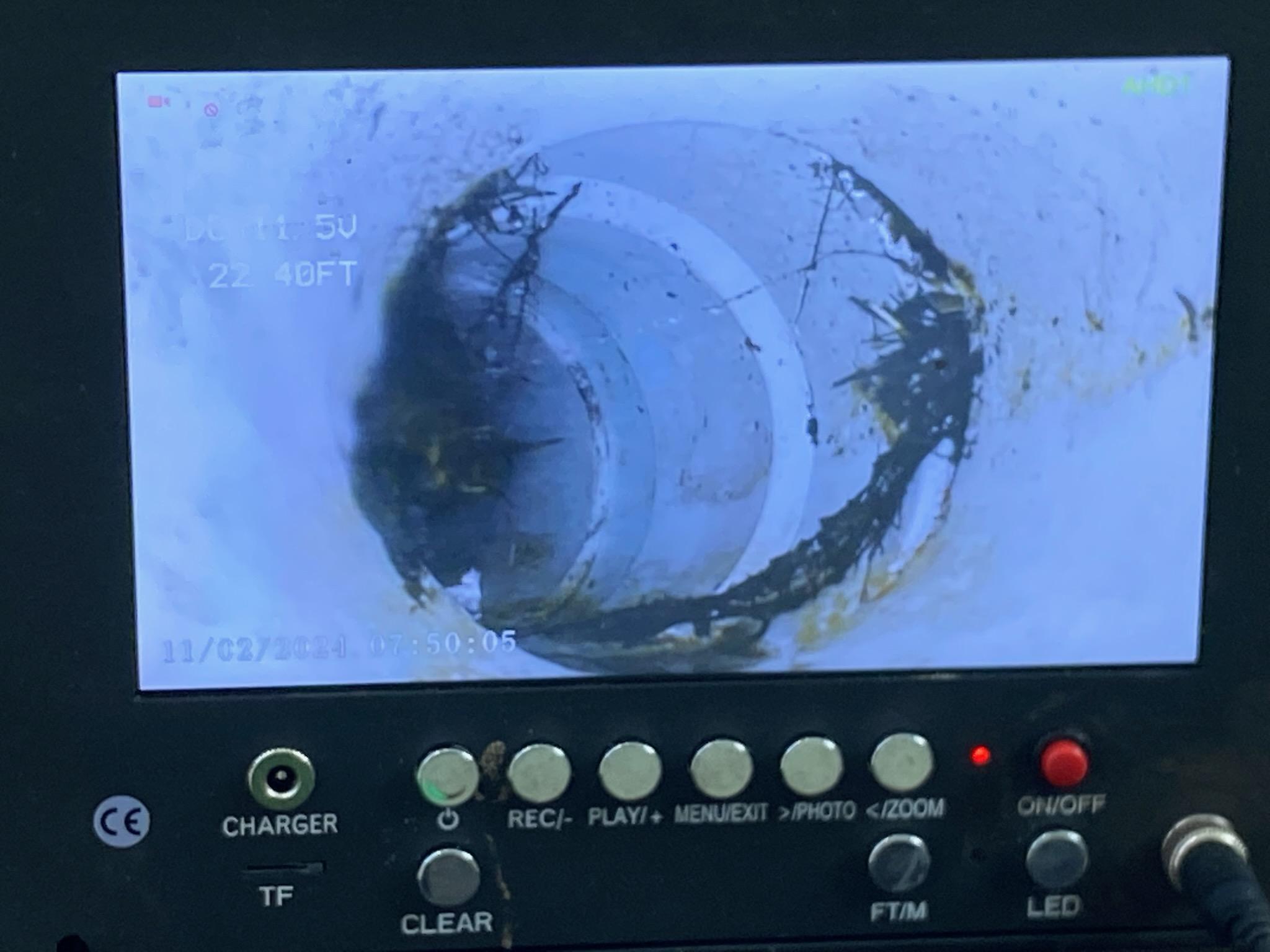
One of the best tools we have to diagnose the issue is our camera. A common job we go on includes finding that there was scale buildup within the line so we use what's called a chain knocker to clean the lines, we jet the lines, we re-camera the lines to make sure it either solved the issue or revealed another root cause that needs to be addressed. A Longwood home with a couple of toilets draining slow and backing up went exactly that way, and it's the order we work in on every line. Camera, clean, jet, camera again. We go in through a cleanout or a pulled toilet and find out whether it is roots, a belly, an offset joint, scale, or a crack before anybody picks up a shovel.
When it comes to sewer, septic and wastewater, we consumers tend to take it for granted. Nobody thinks about the pipe under the slab until a bathroom backs up, and by then guessing gets expensive. At Centrel Services, the person reading your footage is licensed for plumbing and underground utilities. Hydro jetting scours the pipe wall clean. Broken pipe is different. Jetting fixes nothing there, so we talk about sewer line repair instead, which typically runs $1,800 to $6,500 depending on how deep and how long the bad section is.
It finds the five problems behind nearly every recurring backup we see, and each one needs a different fix. On commercial lines, jetting usually pairs with regular grease trap cleaning.
Roots find the joints first and hang into the flow like a curtain. Jetting cuts them back, but through a cracked joint they will grow back.
A belly is a low spot where the pipe lost its pitch, and water sits there on the screen. Fixing it means resetting the grade, which we check with a transit laser.
Clay and cast iron crack with age, and PVC breaks when the ground shifts. The camera shows how many feet out the break sits, so we dig one hole in the right spot.
When two sections slip out of line, the lip catches waste on every flush. Small offsets can often be lined. Big ones get dug up and reset.
Grease and mineral scale narrow a pipe slowly, so the drain gets a little worse every month and nobody notices until it stops. Heavy scale gets a chain knocker first, then the jetter.
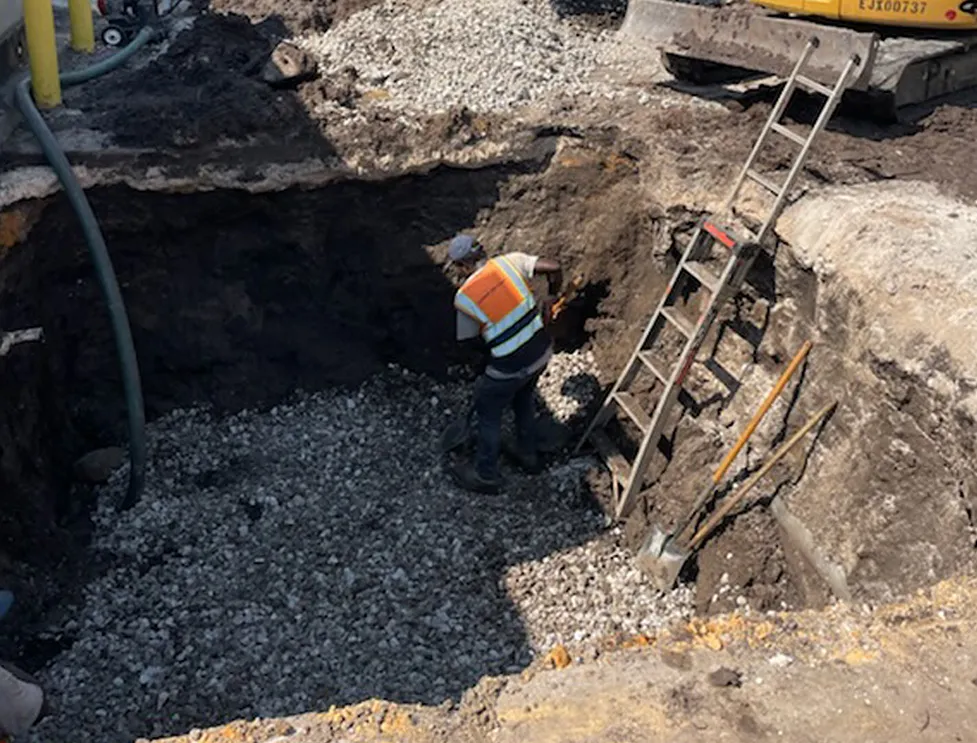
Get one when the same drain keeps backing up, when you are buying a home, or before new plumbing ties into an old line. The Longwood job shows why. Cleaning the scale took care of the lines under the house, but it wasn't the whole story. Outside, where the pipe comes out from under the foundation and runs to the septic tank, the line was back pitched. We dug up and replaced 15 to 20 feet of four-inch sewer line, set the correct pitch, and added new cleanouts. All of it ran through a flower bed, so the crew worked by inches on that side of the house. Another cleaning would never have fixed it.
Same drain every few months? Something in the line is catching waste, and another snake job just resets the clock.
For grease, roots, and scale, yes. A snake punches a hole through the clog and leaves the pipe wall coated, so the clog rebuilds around that hole. Hydro jetting scours the wall itself as we pull the hose back toward the cleanout.
We camera first, every time, because jetting a collapsing clay line can make it worse. When the footage shows structural damage, we walk you through trenchless pipe lining, which puts a new pipe inside the old one without a trench across your property.
Jetting earns its keep on:
When we finish, the camera goes back in so you can see the clean pipe for yourself.
Our Process
It starts at your cleanout and ends with you looking at the same footage we are.
We open the cleanout, note any cracked or missing cap, and send the camera in.
Stand next to us and watch the monitor. We call out what we see as the camera moves.
The footage counter tells us how far down the line each problem sits, and that one number is the difference between a small hole and a long trench.
You get a written report, or we walk you through it on the spot, with a price. Some lines need jetting, some need lining or a repair, and some need nothing at all.
Every task you talked about, written down, with what is included and what is not. A few months back we were collecting bids for CCTV video and cleaning on a major sewer line project. One company got the whole job by phone and the full scope by email, and still sent back a proposal that quietly dropped a big part of the work.
It did not take long to figure out that they could not do those tasks. Accepting it would have meant hiring a second company and paying more in total. That was a dealbreaker. The same test works for you. Does the quote say how many feet of line get inspected, and from which access point? Does it list equipment, disposal, and utility locates, or leave them as surprises? You can see how our crew runs a jetter in tight quarters on our grey water tank cleaning project aboard a Coast Guard cutter.

Our trucks run camera inspections and jetting out of our Sanford shop across five counties:
Schedule Service (321) 363-1995Call during business hours, Mon to Sat, 7 AM to 5 PM, and tell us what your drains are doing. We will tell you whether it can wait or whether we should come out that day, and the estimate is free.