
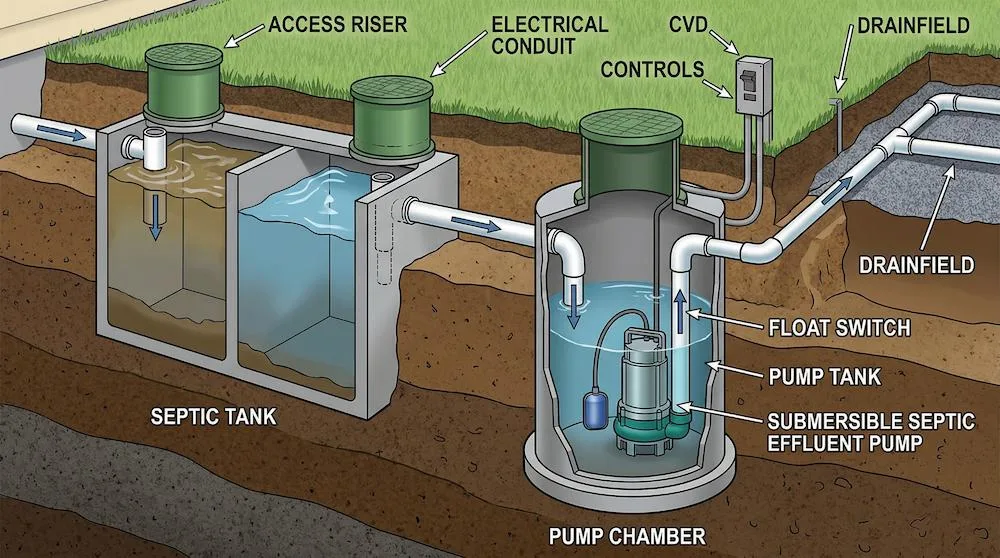
Living in Central Florida means dealing with unique home maintenance challenges, from hurricane prep to fighting off mold in high humidity. But one critical system often gets ignored until it’s too late: the septic tank.
While the national standard says to pump your tank every 3 to 5 years, Florida’s sandy soil, high water table, and frequent heavy rains change the rules. In areas like Sanford and Orlando, that window often shrinks to every 2 to 3 years to prevent system failure. Ignoring this schedule doesn't just risk a messy backup; it threatens your drain field and your wallet.
This guide breaks down exactly when you should schedule septic tank pumping Sanford homeowners rely on, what affects your timeline, and how to spot trouble before sewage backs up into your shower.
Why Florida Septic Systems Are Different
Florida’s geography makes septic maintenance trickier than in other states. Our soil is sandy, which drains quickly—sometimes too fast for proper filtration if the drain field is clogged. Plus, our high water table means there is less vertical distance between your drain field and the groundwater.
The Impact of Rainfall and Soil
During the wet season (June through November), the ground becomes saturated. If your tank hasn't been pumped recently, the extra rainwater can overwhelm the system. The tank fills up faster, and the drain field struggles to absorb the effluent (liquid waste).
This is why we see a spike in emergency calls after major storms. If your tank is full of sludge when a tropical storm hits, the water has nowhere to go but back into your house. Regular maintenance ensures your system has the capacity to handle Florida's heavy rainfall.
Factors Influencing Your Pumping Frequency
While 3 to 5 years is a general guideline, your specific schedule depends on your household's daily habits.
Household Size and Usage
The more people living in your home, the faster the tank fills. A family of four will need to pump much sooner than a retired couple. Here is a general breakdown for a standard 1,000-gallon tank:
- 1-2 People: Every 4-5 years
- 3-4 People: Every 2-3 years
- 5+ People: Every 1-2 years
Garbage Disposals
If you use a garbage disposal, you're introducing solid food waste into the tank that bacteria can't break down easily. This increases sludge buildup significantly. We recommend pumping your tank 50% more often if you use a disposal frequently.
Water Softeners
Many homes in Seminole County, especially around Winter Springs and Oviedo, use water softeners to combat hard water. The backwash from these systems adds extra volume to the tank and can disrupt the bacterial balance needed to break down waste.
Signs Your Septic Tank Needs Pumping
Don't wait for a disaster to call a professional. Your system will usually give you warning signs before it fails.
- Slow Drains: If your kitchen sink, shower, and toilet are all draining slowly, the issue is likely in the tank, not a single pipe.
- Gurgling Sounds: Hear a "glug-glug" noise when you flush the toilet or run the washing machine? That’s air trapped in the lines because the tank is full.
- Bad Odors: A smell like rotten eggs in your yard or coming from your drains is a clear indicator that gases are escaping a full tank.
- Lush Grass: If the grass over your drain field is greener and taller than the rest of your lawn, it’s feeding on excess fertilizer (sewage) leaking upwards.
- Standing Water: Puddles forming near the tank or drain field when it hasn't rained recently indicate the system is overflowing.
The Cost of Septic Tank Pumping in Florida
Homeowners often delay maintenance because they worry about the cost, but pumping is far cheaper than repairs. In Central Florida, the average cost for septic tank pumping Sanford residents pay typically ranges from $300 to $550 for a standard 1,000-gallon tank.
Variables That Affect Price
- Tank Size: Larger tanks (1,200+ gallons) take longer to pump and cost more to dispose of waste.
- Access: If the lid is buried deep underground and requires digging, or if the truck cannot get close to the tank, labor costs will rise.
- Filter Cleaning: Most modern tanks have an effluent filter that needs cleaning, which is usually a small add-on fee ($50-$100).
Compare this to the cost of replacing a failed drain field, which can easily run between $5,000 and $15,000. Regular pumping is a small price to pay for protecting your investment.
Why Regular Inspections Matter
Pumping removes the waste, but an inspection tells you if the system is actually working. During a pump-out, a technician checks the inlet and outlet baffles, the condition of the tank walls, and the sludge levels.
Catching Hidden Issues
We recently visited a home in Lake Mary where the homeowner thought they just needed a routine pump. Upon inspection, we found tree roots had infiltrated the pipes leading to the tank. Because we caught it early, we fixed it with trenchless pipe lining and repair, saving their driveway from being dug up.
Inspections can also identify if your drain field is becoming compacted. If the soil can't absorb water, we might need to look into drain field repair & replacement before sewage surfaces in your yard.
Consequences of Neglecting Your System
Skipping a pump-out isn't like skipping a car wash. The consequences are severe and expensive.
- System Failure: When solids fill the tank, they flow out into the drain field pipes. This clogs the soil, ruining the drain field's ability to treat wastewater.
- Health Hazards: Sewage backups introduce harmful bacteria and viruses into your home or yard, posing a risk to your family and pets.
- Property Damage: Overflowing sewage can damage flooring, drywall, and landscaping.
- Environmental Risks: Leaking tanks contaminate the groundwater—the same water source we rely on in Florida.
DIY vs. Professional Pumping
We see plenty of DIY videos online, but septic pumping is never a do-it-yourself job.
- Safety: Septic tanks contain methane gas, which is flammable and toxic. Opening a tank without proper training is dangerous.
- Equipment: You cannot remove sludge with a shop vac. Professional pumper trucks have powerful vacuums designed to remove solids from the bottom of the tank.
- Disposal: It is illegal to dump septic waste anywhere other than a designated treatment facility. Licensed professionals handle this legal disposal for you.
How to Choose a Septic Service
When looking for septic tank pumping Sanford offers plenty of options, but you need a licensed and insured provider.
- Check Licenses: Ensure the company is registered with the Florida Department of Health.
- Read Reviews: Look for companies with a track record of reliability in your specific neighborhood.
- Get Quotes: Ask for a clear price upfront that includes disposal fees.
Maintaining Your System Between Pumpings
You can extend the life of your septic system by watching what goes down the drain.
- Water Conservation: Fix leaky faucets and running toilets. Spacing out laundry loads prevents flooding the tank all at once.
- Mind Your Drains: Never pour grease, oil, or chemical drain cleaners down the sink. These kill the good bacteria your tank needs.
- Protect the Drain Field: Do not park cars or heavy machinery on your drain field. This compacts the soil and can crush the pipes.
Florida Regulations You Should Know
The Florida Department of Health regulates all septic systems in the state. If your system fails or needs major repair, you will likely need a permit. Keeping records of your pump-outs is helpful if you ever sell your home, as proof of maintenance is often requested during inspections.
Schedule Your Pumping Today
If it has been more than three years since your last service, or if you aren't sure when the tank was last pumped, don't wait for a backup. Regular maintenance keeps your home sanitary and saves you thousands in repairs.
For reliable septic tank pumping Sanford homeowners trust our team; we are ready to help. We know the local soil, the local regulations, and how to keep your plumbing running smoothly.
Need to schedule service? Contact Centrel Services today at (321) 363-1995.