Camera Inspection
We run the camera through every line that needs repair to measure it, mark the damage, and confirm lining is the right fix before anything gets cut.

Before & After
Cured Liner
Technology
Written Estimates
Trenchless pipelining is a powerful tool that is usually used after the first guy who was called overlooked the real issue. Homeowners and business owners may be experiencing backups and they may have had someone come out and take a look, didn't necessarily recognize that the pipe itself was compromised, that person or that company cleaned it, and then maybe two weeks later it's the same problem. That repeat call is how most of our lining customers find us, and most of them are commercial. Sometimes the warning is a hole opening up on the surface, because dirt is leaking down into the line through a break. Cleaning won't fix that.
When trenchless pipelining is a feasible option, customers choose this process because it saves time and manpower. A hole doesn't need to be dug, so no crane is needed to drop in a trench, nor site restoration once the job is complete (like applying grass or asphalt to the area that was excavated). Instead of cutting across your parking lot or through a slab, we build a new pipe inside the old one through an access point that is already there.
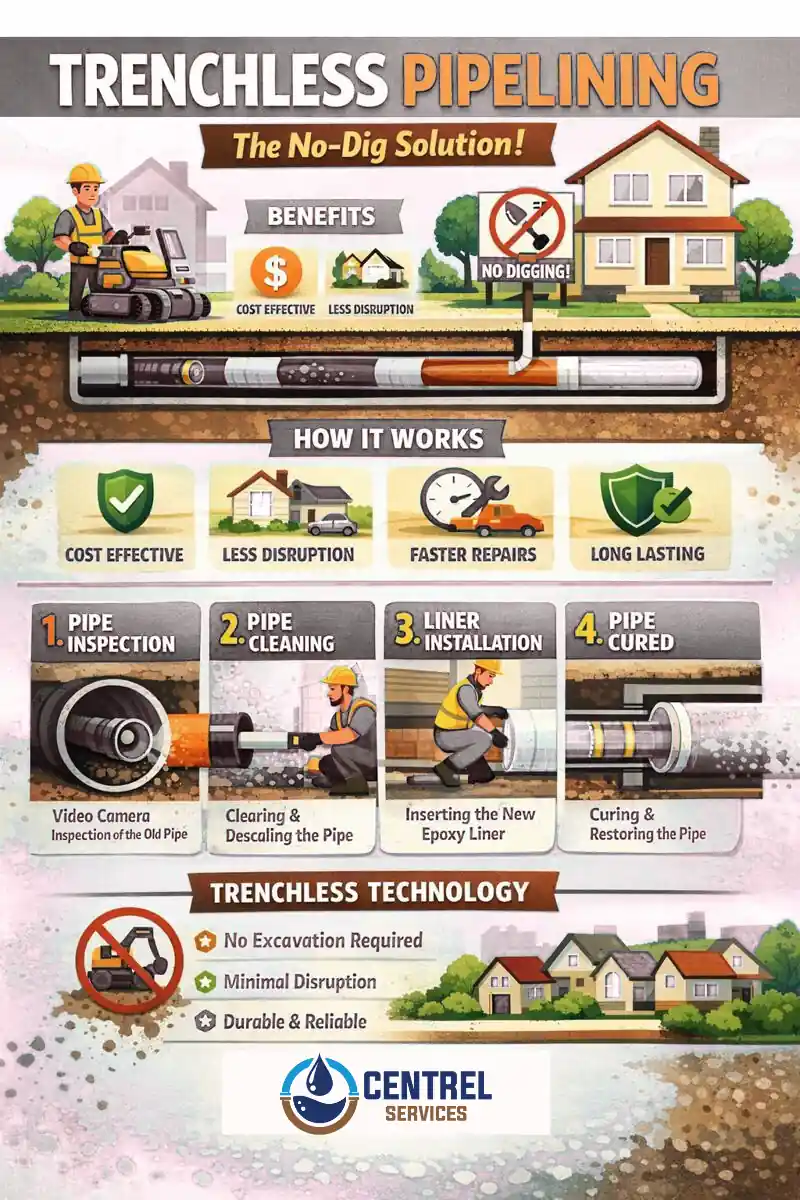
Here is the job in plain terms. It is also called CIPP, short for cured in place pipe. After a sewer camera inspection shows where the damage starts and stops, we custom cut a liner, basically a deflated sock, coat it in resin, and feed it into the damaged pipe. Then it inflates. The liner presses tight against the old pipe wall, and UV light hardens it into the new pipe.
Lining is not the answer to every pipe, and we will tell you when it is not. Centrel Services holds both a plumbing contractor license and an underground utilities contractor license, so the crew that lines your pipe can also open the ground when the camera says it has to.
Four steps, and the camera bookends all of them, with a full hydro jetting cleaning before any liner goes in:
We run the camera through every line that needs repair to measure it, mark the damage, and confirm lining is the right fix before anything gets cut.
Roots, grease, and scale come out first with hydro jetting. A liner pressed against debris will not seat tight against the pipe wall.
We custom cut the resin coated liner to cover the damaged run and feed it into the pipe through the cleanout or another access point.
The liner inflates against the old pipe and cures under UV light until it is hard. A post inspection with the camera confirms it is precise and flowing.
Mostly drainage trouble: scale, cracks, joint separation, and leaks, as long as the pipe still holds its shape. Back pitch is the exception. A liner follows the pipe it sits in, so a line sloped the wrong way has to be dug up and relaid at the right pitch.
Clay, cast iron, and even PVC crack from age, settling sand, or root pressure. The liner seals the crack from the inside so it stops spreading.
Roots find the joints and hairline cracks first. Once the line is lined, there is no joint left for them to push through.
When sections pull apart or shift, waste catches on the lip and dirt can wash in through the gap. Lining gives the flow one smooth, continuous wall.
Old cast iron rusts from the inside and grows scale that narrows the pipe. We clean the scale out, then line it with a smooth new wall.
Every joint is a place for groundwater to get in or sewage to get out, and with Central Florida water tables, infiltration is a real problem. The liner runs straight past them.
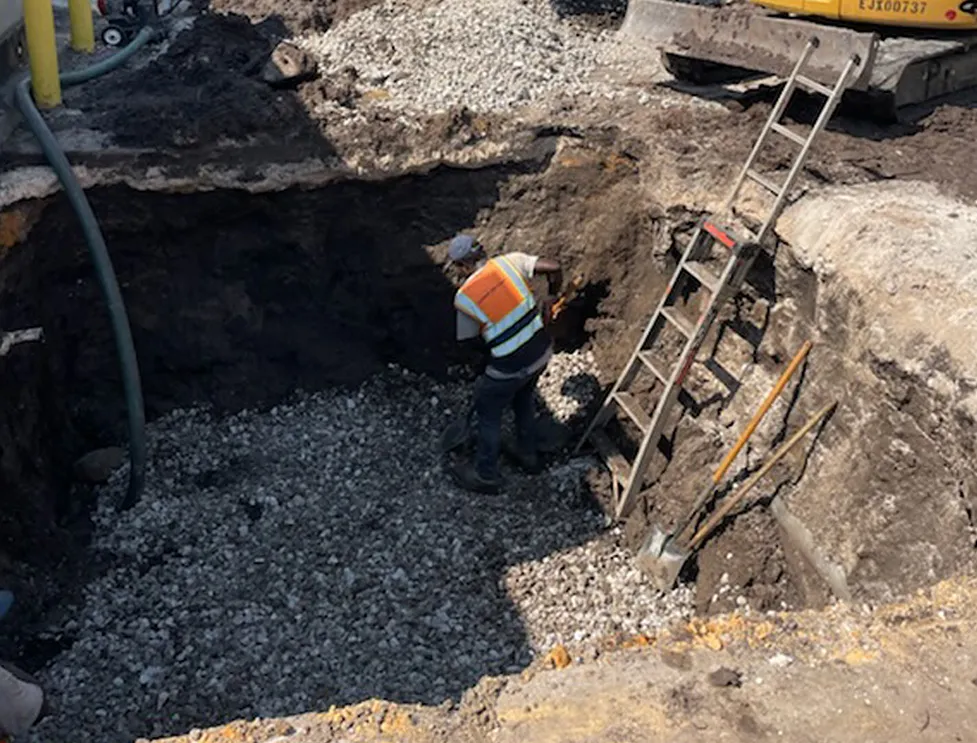
Often, once you count the restoration. Replacing a pipe the old way means a trench along the whole damaged run, which brings:
Lining usually needs one or two access points, often a cleanout that's already on the property. That's where the savings show up on the invoice.
It is not always the cheaper path, though. A short, shallow run in open ground can be quicker to dig than to line. When both options are realistic, we price both on a written, itemized estimate and let you choose.
When the pipe is damaged but still holds its shape. If it has collapsed or sags, we dig.
We do not guess. The footage decides, and a line that needs digging goes to our sewer line repair crew. Most sewer line repairs run $1,800 to $6,500 depending on depth and length.
Most of our lining work is commercial, and it's spread all over Central Florida. We run it from our Sanford shop, including:
Schedule Service (321) 363-1995Click any question below to reveal the answer.
Contact UsThat depends on the pipe it sits in and how well the line was cleaned before lining. A cured liner has no joints for roots to get through and no iron to rust. We camera the line after curing, so you have footage of the finished pipe for your records.
The inside diameter shrinks a little, since the liner adds a thin wall. In practice an old cast iron or root packed line often drains better afterward, because the inside is smooth instead of scaled and rough.
Gradual bends, usually yes. Sharp 90 degree turns or back to back bends may need a spot repair or a sectional liner instead. The camera shows us which before we quote.
It depends on how long the damaged run is, the pipe size, how many access points we need, and how much cleaning the line takes first. After the camera inspection you get a free, written, itemized estimate. If digging is the better value for your line, we will say so.
Call (321) 363-1995 to book a camera inspection and a free, itemized lining estimate.