
Living in Central Florida comes with plenty of perks, but our unique landscape—flat terrain and high water tables—means our wastewater systems have to work harder than in other parts of the country. If you own property in coastal areas or low-lying regions like Deltona, your lift station is the unsung hero keeping sewage flowing in the right direction. When that station fails, the results aren't just messy; they're expensive.
Most property owners don't think about their lift station until the alarm goes off or, worse, wastewater starts backing up. In coastal Florida, the mix of salt air, humidity, and heavy summer rains creates a challenging environment for mechanical equipment. Lift stations here corrode faster and face higher stress loads than the national average.
This guide explains exactly what your lift station does, why Florida's climate is tough on it, and how proactive maintenance saves you thousands in emergency repairs.
What Does a Lift Station Actually Do?
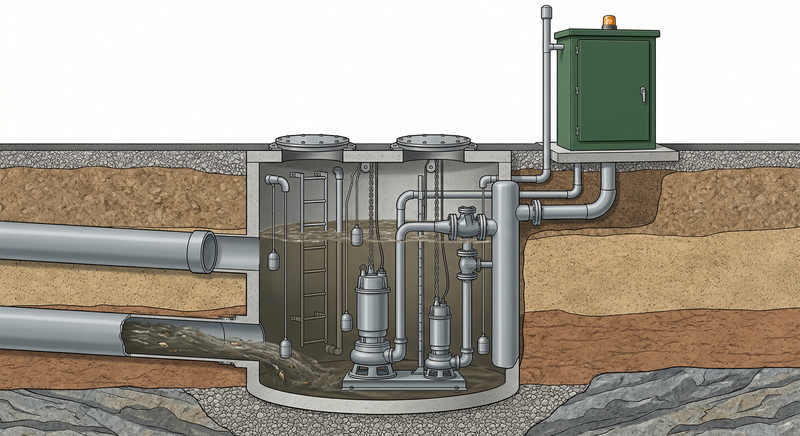
Think of a lift station as an elevator for wastewater. Because Florida is so flat, gravity isn't always enough to move sewage from your property to the main treatment plant or a higher elevation septic field. When wastewater flows into a collection well (called a wet well), it sits there until it reaches a certain level. Once that level is hit, pumps activate to "lift" the sewage through a pressurized pipe (force main) to its destination.
Key Components You Should Know
- The Wet Well: The basin that holds the wastewater.
- Submersible Pumps: The engines that move the waste. Most stations have two (a duplex system) for redundancy.
- Control Panel: The brain of the operation, managing pump cycles and alarms.
- Float Switches: Sensors that tell the pumps when to turn on and off based on water levels.
In our area, we typically see two main types: dry well/wet well stations and submersible pump stations. For residential and light commercial coastal properties, submersible stations are the standard because they save space and are generally easier to service.
Why Florida Weather is Tough on Lift Stations
Florida's climate is brutal on mechanical systems, and lift stations are no exception. The high humidity in Orlando and coastal Volusia County accelerates corrosion on electrical components inside the control panel. If your panel isn't sealed tight, moisture can destroy breakers and relays within 3-5 years, well before their expected lifespan.
Saltwater intrusion is another major headache for coastal property owners. If you're near the coast, saltwater can seep into the wet well through cracks or loose seals. Saltwater is highly corrosive to pump impellers and seals. We've seen pumps that should last 10-15 years fail in half that time because saline water ate through the protective coatings.
Debris is the third big killer. Florida's sandy soil often infiltrates the system during heavy rain events—like the summer storms we get every afternoon from June through September. Sand acts like sandpaper inside your pump, wearing down the impeller until it can no longer move waste efficiently.
How Often Do You Need Lift Station Maintenance?
For most commercial and multi-unit residential properties in Central Florida, we recommend monthly inspections. At a minimum, quarterly maintenance is required to catch issues before they become emergencies. Waiting until the alarm light flashes usually means the damage is already done.
Preventative maintenance is significantly cheaper than reactive repairs. A typical maintenance visit might cost $200-$400, depending on the station size, whereas replacing a burned-out 2HP sewage pump can easily run $1,500 to $3,500, not including the emergency vacuum truck fees to pump out the overflow.
Regular inspections allow technicians to check amperage draws on the pumps. If a pump is drawing high amps, it's working too hard—maybe due to a clog or a failing bearing. Catching this early means a simple cleaning or part replacement rather than buying a whole new pump.
If your property utilizes a hybrid system, you might also need septic tank pumping to keep the primary treatment stage functioning correctly. Keeping the solids level down in the primary tank prevents sludge from flowing into your lift station and burning out the pumps.
Our Lift Station Repair Services
When a station goes down, time is money. Our team handles everything from minor electrical fixes to full station rehabilitation.
- Pump Repair & Replacement: We service all major brands (like Hydromatic, Flygt, and Myers). We check seals, bearings, and impellers.
- Control Panel Troubleshooting: Electrical issues cause nearly 40% of all lift station failures. We repair float switches, replace capacitors, and fix wiring corroded by Florida humidity.
- Valve Replacement: Check valves prevent sewage from flowing back into the well. If these fail, your pump runs continuously (short-cycling) until it burns out.
- Emergency Response: We know sewage doesn't wait for business hours. We offer rapid response to minimize downtime and environmental hazards.
Our technicians are experienced with the specific code requirements for Orange, Seminole, and Volusia counties. We know exactly what local inspectors look for and ensure every repair meets current environmental standards.
Your Maintenance Checklist
While you should always hire a pro for the electrical and mechanical work, there are things property owners can do to keep their system healthy.
Weekly Checks:
- Listen: Do you hear the pump running? Does it sound smooth, or is it grinding?
- Look: Is the alarm light flashing? Is there any standing water around the station lid?
- Smell: Strong sewage odors usually mean a seal has failed or the ventilation is blocked.
What Not to Flush:
The biggest enemy of lift station maintenance Deltona residents face is "flushable" wipes. Despite the label, these wipes do not break down. They clump together with grease (FOGs) to form "rag balls" that jam pump impellers instantly. Never flush wipes, feminine hygiene products, or grease down the drain.
Professional Maintenance Tasks (Monthly/Quarterly):
- Check pump amperage and voltage.
- Test all float switches (Lead, Lag, and High Water Alarm).
- Inspect the check valve for backflow.
- Clean the floats of grease buildup (grease interferes with the sensors).
During these visits, we might also recommend sewer line camera inspection and jetting if we notice slow inflow to the station. This clears out lines before a blockage stops flow completely.
Staying Compliant with Florida Regulations
Florida has strict environmental regulations regarding wastewater, especially near our springs and coastlines. The Florida Department of Environmental Protection (FDEP) requires that lift stations be maintained to prevent overflows.
If your station overflows due to negligence, you could face hefty fines from the county or state. For commercial properties, this also means potential shutdown orders. Proper maintenance isn't just about saving pumps; it's about staying legal. Documentation of regular service visits is your best defense if an environmental officer ever asks for records.
Real-World Examples from Central Florida
We recently helped a homeowners' association in Lake Non, where the lift station pumps were failing every six months. It turned out the residents were flushing an excessive amount of cleaning wipes. We pulled the pumps, manually removed massive rag balls, and installed a grinder pump upgrade. The grinder pump shreds solids before they enter the discharge pipe. Since the upgrade two years ago, they haven't had a single pump failure.
Another case involved an older property in Daytona Beach. Saltwater had corroded the steel rail system that guides the pumps in and out of the well. We had to perform a confined space entry to replace the rails with stainless-steel components that can withstand the coastal environment. This proactive repair saved the owner from a catastrophic failure during hurricane season.
Choosing the Right Service Provider
Not every plumber is qualified to work on lift stations. These are complex industrial systems involving high-voltage electricity and confined space hazards. When looking for lift station maintenance Deltona services, or repairs in the surrounding areas, look for:
- Experience: Ask how many stations they currently manage.
- Equipment: Do they have their own crane trucks to pull pumps? Do they have vacuum trucks?
- Response Time: Can they get there within 2-4 hours in an emergency?
- Local Knowledge: Do they understand the specific groundwater challenges of neighborhoods like MetroWest or the sandy soils of New Smyrna Beach?
Avoid companies that give quotes over the phone without seeing the station. Every setup is different, and variables like depth, pipe diameter, and voltage determine the cost.
The Future of Lift Station Tech
Technology is making lift station management easier. We are seeing a shift toward smart control panels with remote monitoring. These systems send text alerts to your phone (and ours) the second a high-water alarm trips or a pump fails.
Instead of relying on a neighbor to hear a buzzer or see a red light, you get real-time data. This is a game-changer for snowbirds or commercial property owners who aren't on-site daily. Retrofitting an older station with smart monitoring costs significantly less than cleaning up a sewage spill.
When to Call for Help
If you hear an alarm, smell sewage, or notice your drains are slow, don't wait. Issues with lift stations never resolve themselves; they only get more expensive. Whether you're managing a condo complex in Cocoa Beach or a commercial plaza in Sanford, regular care is the key to longevity.
Centrel Services has been keeping wastewater moving in Central Florida for years. We handle the dirty work so you don't have to.
Need Help With Your Lift Station?
Contact Centrel Services today at (321) 363-1995 for a comprehensive inspection. We serve all of Central Florida, providing reliable solutions for coastal and inland property owners alike.