
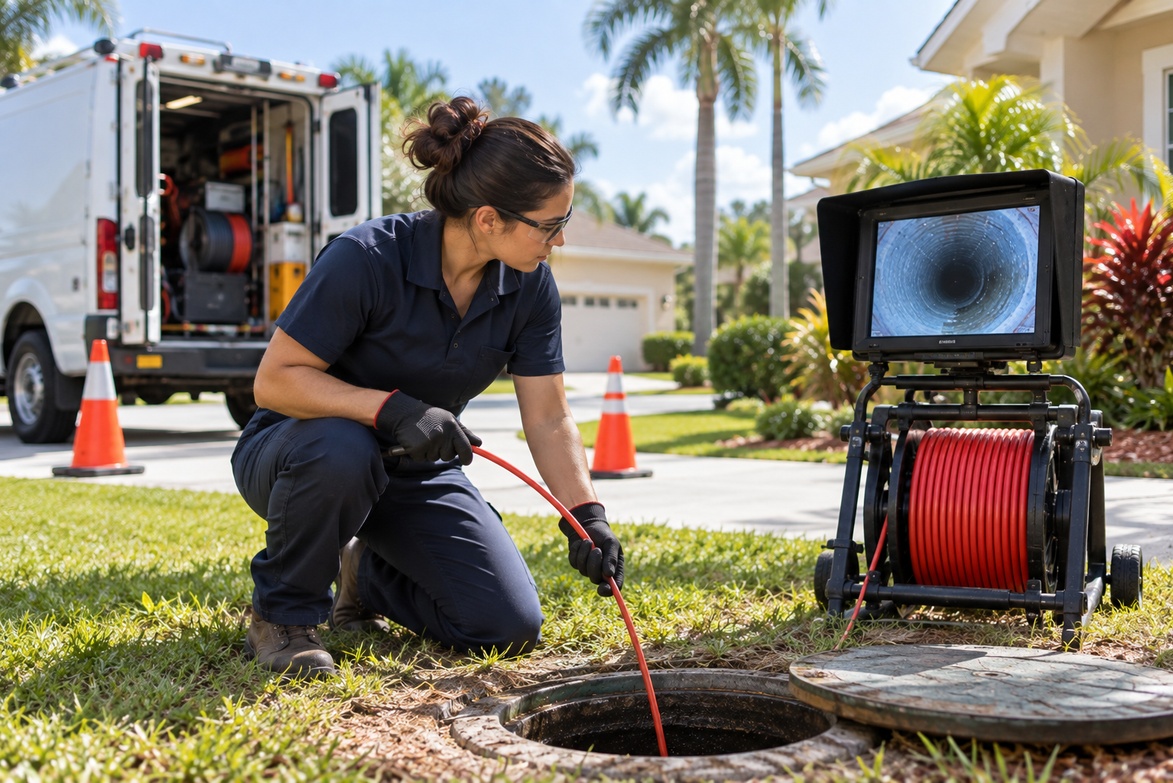
A cracked or root-clogged sewer line does not automatically mean days of excavation and a torn-up yard. For many Deltona homeowners, trenchless pipe lining repairs the line in a single day without touching the landscaping above it. Centrel Services can tell you whether your line qualifies after a camera inspection. Call (321) 363-1995 or schedule your inspection online to find out.
The dread that comes with a sewer line diagnosis is usually not about the pipe itself. It is about what fixing the pipe might do to the driveway, the mature landscaping, or the backyard that took years to get right. For homeowners in Deltona's established neighborhoods, where oak roots are the most common culprit in sewer line damage, the prospect of a backhoe in the yard is often more alarming than the plumbing problem. Trenchless pipe lining addresses that fear directly by repairing the pipe from inside, through existing access points, without digging a trench along the line. Whether it is the right solution for a given situation depends on the condition of the pipe, and a camera inspection answers that question definitively.
How Does the Cured-in-Place Liner Actually Work?
Cured-in-place pipe lining, often called CIPP, creates a new pipe inside the existing damaged one without removing or replacing the original. The process begins with a thorough cleaning of the interior of the existing pipe using high-pressure water jetting to clear any roots, scale, grease buildup, or debris that would interfere with the liner adhering properly. After cleaning, a camera inspection confirms the line is ready to receive the liner and documents the condition of the pipe at every point along the repair section.
The liner itself is a felt or fiberglass tube saturated with a two-part epoxy resin. It is inserted into the pipe through an existing cleanout or access point and inflated with air pressure so it presses firmly against the interior walls of the damaged pipe. The resin is then cured, either through hot water, steam, or UV light depending on the liner type, which hardens it into a smooth, continuous pipe within the pipe. Once cured and reinflated to confirm shape, the liner is trimmed at the entry and exit points and the line is camera-inspected a final time to verify the repair.
The finished liner has a flow capacity comparable to new pipe because its interior surface is smoother than the aged or damaged original. Root penetration through the liner is significantly more difficult than through the original pipe material, which gives the repaired section a longer effective service life than the pipe it lines. For lines that have experienced recurring root intrusion, the liner is not just a repair. It is an upgrade to a surface that roots have a harder time re-entering.
How Does a One-Day Trenchless Timeline Compare to Days of Excavation?
A conventional sewer line repair by excavation involves locating the damaged section, marking utilities, digging a trench along the pipe run, removing the damaged section, installing new pipe, backfilling the trench, and restoring the surface. For a residential line running from the house to the street under a driveway, mature landscaping, or a section of yard with established tree roots, that process typically runs two to four days depending on access conditions and the length of the repair section. The surface restoration, whether that means repaving a driveway section or re-establishing disturbed landscaping, adds additional time and cost that the excavation bid may or may not include.
A trenchless lining repair on a qualifying line typically completes in a single day. The cleaning and jetting take a few hours, the liner installation and curing take a few more, and the final camera inspection closes out the job. The homeowner's water service is interrupted for the duration of the work and restored the same day. No trench is opened, no driveway is cut, and the yard looks the same after the crew leaves as it did when they arrived. For a homeowner weighing the cost of a trenchless repair against excavation, the saved surface restoration costs often close a significant portion of the price gap between the two methods.
We worked with a Deltona family who had spent years creating a garden they genuinely loved, including an established rose garden that had become the focal point of their backyard. When their sewer line developed a problem that could not be cleared by jetting alone, their first call was not about the pipe. It was about whether fixing it would destroy the garden. We explained that the line's condition made it a good candidate for trenchless lining, which meant the repair could happen without any excavation in the garden area at all. The line was repaired, the rose garden was untouched, and the family did not have to choose between their plumbing and the yard they had spent years building.
What Are the Realistic Cost Drivers for a Trenchless Repair?
Trenchless pipe lining costs more per linear foot than new pipe installed by excavation in ideal soil conditions. That comparison, taken on its own, makes trenchless seem like the more expensive option, and in some scenarios it is. The fuller cost picture includes what excavation actually costs when surface restoration is factored in, when utility conflicts require hand-digging, when mature trees make trench access difficult, or when the repair section runs under a driveway or concrete patio that would need to be cut and repaired.
The cost drivers specific to a trenchless job are the length of the liner, the diameter of the pipe, the access conditions at the insertion point, and whether pre-lining root removal by jetting is straightforward or complicated by heavy obstruction. A fifty-foot repair on a four-inch residential sewer line with good cleanout access is a different project than a hundred-foot repair on a six-inch line that requires creating a new access point. The camera inspection that precedes any trenchless recommendation gives a clear picture of those variables before a price is presented.
Financing and insurance are also real cost factors for some homeowners. Some homeowner's insurance policies cover sewer line damage from specific causes, and whether the repair method is trenchless or conventional may affect the claim. It is worth reviewing your policy language or asking your insurer before committing to a repair method if coverage is a possibility. A contractor who can provide documentation of the damage and the repair scope in a format insurers accept makes that conversation easier.
Which Pipe Conditions Rule Out Trenchless Lining?
Trenchless lining is not the right answer for every damaged sewer line, and a contractor who recommends it without first inspecting the line is recommending it without the information needed to make that call responsibly. Several pipe conditions make lining impractical or impossible, and a camera inspection identifies them before any work begins.
Severe pipe collapse or displacement, where sections of the pipe have shifted out of alignment or caved in on themselves, cannot be lined because the liner requires a structurally continuous host pipe to inflate and cure against. A section that is more hole than pipe is not a lining candidate. Similarly, a pipe with significant offset joints, where settlement has caused adjacent sections to misalign, may not allow the liner to pass through or to cure in a way that creates a watertight seal at the transition.
Very short repair sections and sections with complex geometry, such as multiple tight bends in a short run, may also be better addressed through targeted excavation and spot repair than through lining. A camera inspection that identifies a discrete area of damage rather than degradation along the full pipe run often points toward a more targeted fix that costs less than lining the entire section.
If your Deltona sewer line has been slow, backing up, or showing signs of root intrusion and you want to know whether trenchless repair is a realistic option before you worry about what it means for your yard, the first step is a camera inspection. Call Centrel Services at (321) 363-1995 or request your inspection online. Our sewer line camera inspection and jetting service tells you exactly what your line looks like, and our trenchless pipe lining and repair team handles the repair if the line qualifies.