
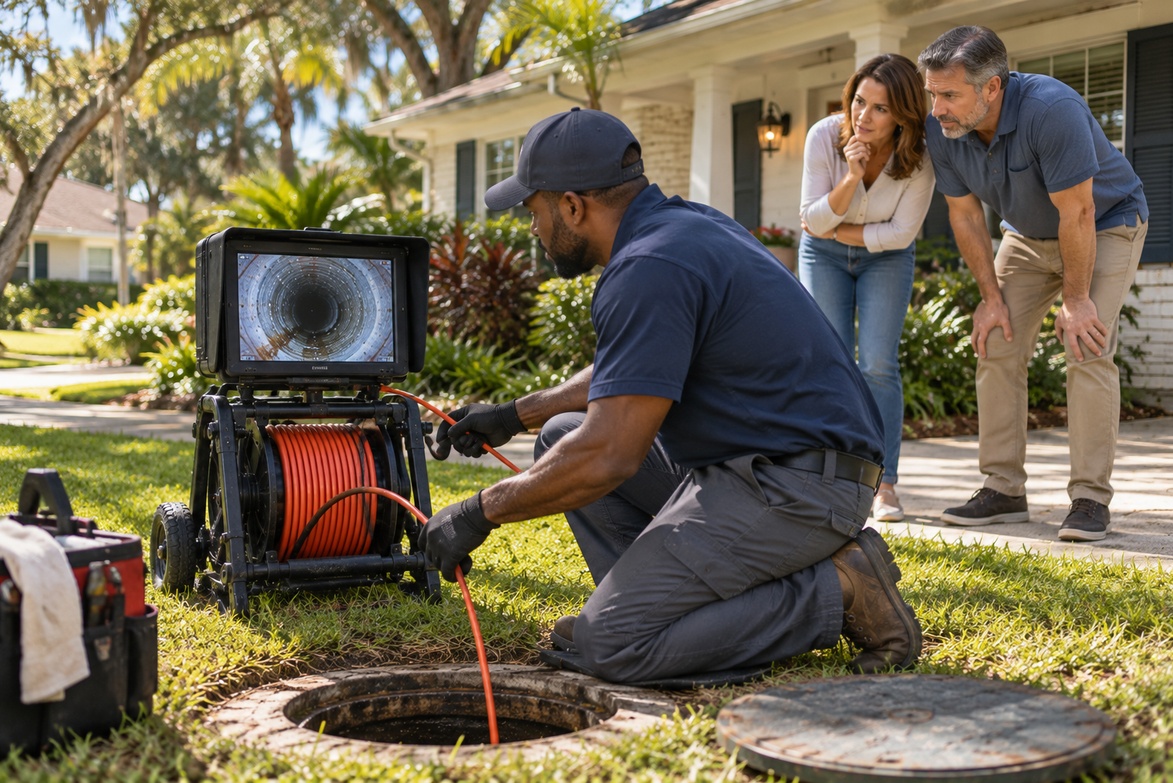
A pre-purchase sewer camera scope is one of the least expensive inspections you can add to a home purchase and one of the most likely to find something that changes the negotiation. If you are under contract on an older Orlando property and your option period is still open, this is the week to schedule it. Call Centrel Services at (321) 363-1995 or book your inspection online before the window closes.
Orlando's older neighborhoods, from College Park to Colonialtown to the historic districts around Lake Eola, have housing stock built in the 1940s through the 1970s that is attracting buyers who value the character and established lots those homes offer. What those buyers do not always know is that the sewer lines under those properties are often original cast iron or clay pipe that has had decades to develop problems, and that standard home inspections are not designed to find them. A camera scope that takes ninety minutes to run is the only reliable way to see what is actually inside that pipe before you own it.
What Does the Camera Actually Find Inside an Older Sewer Line?
The four problems that show up most consistently in older Orlando sewer lines are root intrusion, pipe bellies, cracks and fractures, and offset joints, and each one has a different repair implication and cost profile. Understanding what the camera found means understanding which of these is present, how severe it is, and where along the line it occurs.
Root intrusion is the most common finding in properties with mature trees, which describes a significant portion of Orlando's older neighborhoods where live oaks, camphor trees, and other deep-rooted species have had decades to extend their root systems into the underground pipe infrastructure. Roots enter through small cracks or joint gaps and grow into masses that restrict flow, cause backups, and eventually break the pipe further. A line with early-stage root intrusion may still be flowing, which is why the homeowner has no symptoms. The camera shows what the symptoms have not yet revealed.
A belly is a low spot in the pipe where the line has settled or shifted downward over time, creating a section where wastewater pools rather than flowing through. Bellies in a sewer line cause recurring slow drains, accumulate solids that build up into blockages, and can eventually lead to sewage backup. They are caused by soil settlement, poor original installation, or undermining from tree roots or water erosion over time. A belly that is minor may be manageable; one that is severe or that has created standing water in the line consistently requires correction.
Cracks and fractures in cast iron or clay pipe allow ground water to infiltrate the sewer line during rain events, which increases the flow load on the municipal sewer system and can cause backup conditions in the home during heavy rain. Offset joints, where ground movement has shifted adjacent pipe sections out of alignment, create the same infiltration pathway and also restrict the interior diameter of the line at the offset point. Neither condition is visible from inside the house or from a general home inspection.
Why Does a Standard Home Inspection Miss the Sewer Line?
A licensed general home inspector evaluates what is visible and accessible: the roof, the electrical panel, the HVAC system, the plumbing fixtures, the foundation from the accessible crawlspace or interior. The sewer line, which runs underground from the house to the municipal connection at the street, is not visible or accessible without a camera inserted into the cleanout. General inspectors are not equipped to perform sewer scopes and typically do not include them in their standard scope of work. The inspection report may note that the sewer line was not evaluated, which is accurate disclosure, but buyers who do not specifically arrange a separate camera inspection walk away from that report thinking the plumbing was checked when only the interior fixtures were.
This gap is particularly significant in older Orlando properties because the age of the pipe correlates directly with the likelihood of finding problems. A twenty-year-old PVC sewer line in a newer construction is unlikely to have significant deterioration. An original 1955 clay pipe line that has not been scoped or serviced in decades is a different situation entirely, and the purchase price of that property does not automatically account for what might be underground.
The option period in a Florida real estate transaction is the window when additional inspections can be scheduled and, if the findings warrant it, the buyer can withdraw or renegotiate without penalty. A sewer camera inspection is specifically designed for this window. It is fast enough to schedule and complete within a few days of going under contract, inexpensive relative to the repair costs it might reveal, and produces a video record of the line's condition that the buyer can share with the seller to support any repair credit request.
How Do Camera Findings Become Negotiating Leverage?
A couple moving quickly on a home purchase for a job relocation found a property they genuinely wanted in an established Orlando neighborhood. A family member who had been through a similar purchase pushed them to add a sewer scope during their inspection period despite the time pressure they were under. The camera revealed significant root intrusion and a belly in the main sewer line, neither of which had produced obvious symptoms yet. Armed with the video documentation and a repair estimate, they went back to the seller with a specific, documented request for a purchase price reduction that reflected the actual cost of addressing what the camera found. The seller agreed. They closed on the home without the surprise, and without having paid the full original price for a property with a known underground liability.
Camera findings translate into negotiating leverage because they are documented, specific, and priced. A repair estimate for root intrusion removal and lining, or for excavation and replacement of a collapsed section, is not a vague concern. It is a number the seller has to respond to. A seller who knows a buyer has video documentation of a failing sewer line and a contractor's estimate in hand is in a different negotiating position than one responding to general concerns about the age of the property. The inspection converts an unknown risk into a quantified one, and quantified risks are negotiable.
The findings also inform the buyer's decision about whether to proceed at all. A sewer line with minor root intrusion that a one-time jetting service will clear is a different situation than one with a collapsed section under the driveway that requires excavation and full replacement. Both findings come from the same camera scope. What the buyer does with them depends on the severity, the cost to repair, and their own risk tolerance. Having that information before closing rather than after is the point of the exercise.
What Do Sewer Line Repairs Typically Cost, and What Options Exist?
Repair costs vary based on what the camera finds, where the problem is located, the length of pipe involved, and what method is appropriate for the condition. Root intrusion that has not yet caused structural damage may be addressed with high-pressure hydro jetting to clear the line and a follow-up inspection to confirm the pipe walls are intact. That service costs significantly less than a structural repair and may be all the line needs if the damage is caught early.
Structural repair for cracked, fractured, or root-damaged pipe where the pipe wall is compromised typically goes one of two directions. If the pipe retains enough structural integrity to serve as a host, trenchless pipe lining and repair inserts a new liner inside the existing pipe without excavation, completing the repair in a day without disturbing the yard or driveway above. If the pipe has collapsed or shifted badly enough that it cannot accept a liner, targeted excavation and section replacement addresses the damaged area directly. The camera inspection determines which approach applies before any work begins.
Full sewer line replacement from the house to the street is the highest-cost scenario and is warranted when the pipe's condition is too deteriorated for repair along most of its length. In older Orlando properties where the original clay pipe has been in the ground for sixty or seventy years, that finding is not rare, and knowing it before closing rather than after the first backup is the outcome the camera inspection is designed to produce.
If you are under contract on an older Orlando home and your option period is still open, schedule your sewer line camera inspection and jetting now while you still have time to act on what it finds. Call Centrel Services at (321) 363-1995 or book your inspection online today.